
- Personalization
- eCommerce
- 10 min read
How Bad Personalization Can Cost You Customers?
Published
30 August 2024Updated
23 April 2026

core insights box
- Bad personalization can harm your brand by delivering irrelevant or intrusive experiences to your customers.
- Over-personalization can make tailored experiences feel way too pushy!
- Personalization gone wrong can push customers away instead of engaging them.
- Consistent, omnichannel personalization prevents confusion and enhances user engagement.
- Experro helps you avoid bad personalization with AI-driven results for scalable, precise personalization.
Have you ever come across a completely irrelevant product recommendation?
It’s confusing, right?
Bad personalization can quickly turn away a potential customer and can damage your brand’s reputation.
Everyone has faced repercussions due to personalization failures, from irrelevant ads that miss the mark to poorly timed messages that feel out of place. These personalization errors highlight the risks involved and the significant cost of getting it wrong.
It is crucial to understand what is personalization and how it should be correctly implemented. The expectations are high as today’s consumers want brands to meet their needs without breaching their comfort zone.
In this blog, we’ll explore bad personalization, how it can backfire, and the steps you can take to avoid these mistakes.
What Is Bad Personalization, Or How Does Personalization Qualify As "Bad"?
Bad personalization occurs when your brand tries to personalize but misses the mark. It’s more than a wrong product suggestion — it’s any moment where shoppers feel misunderstood, mis-targeted, or overlooked.
Also, bad personalization is on the opposite end of hyper personalization in eCommerce shopping.
Many brands still think personalization means greeting customers by their name or showing basic “popular products.” But poorly executed AI-driven personalization, weak data signals, and oversimplified logic often create experiences that feel generic, irrelevant, or even intrusive.
Personalization is not just displaying the search results or using a customer's name in an email. There are many more types of good website personalization.
What Are the Types of Bad eCommerce Personalization?
Bad personalization isn’t always obvious, sometimes it looks like personalization on the surface, but the quality, logic, or timing is completely off.
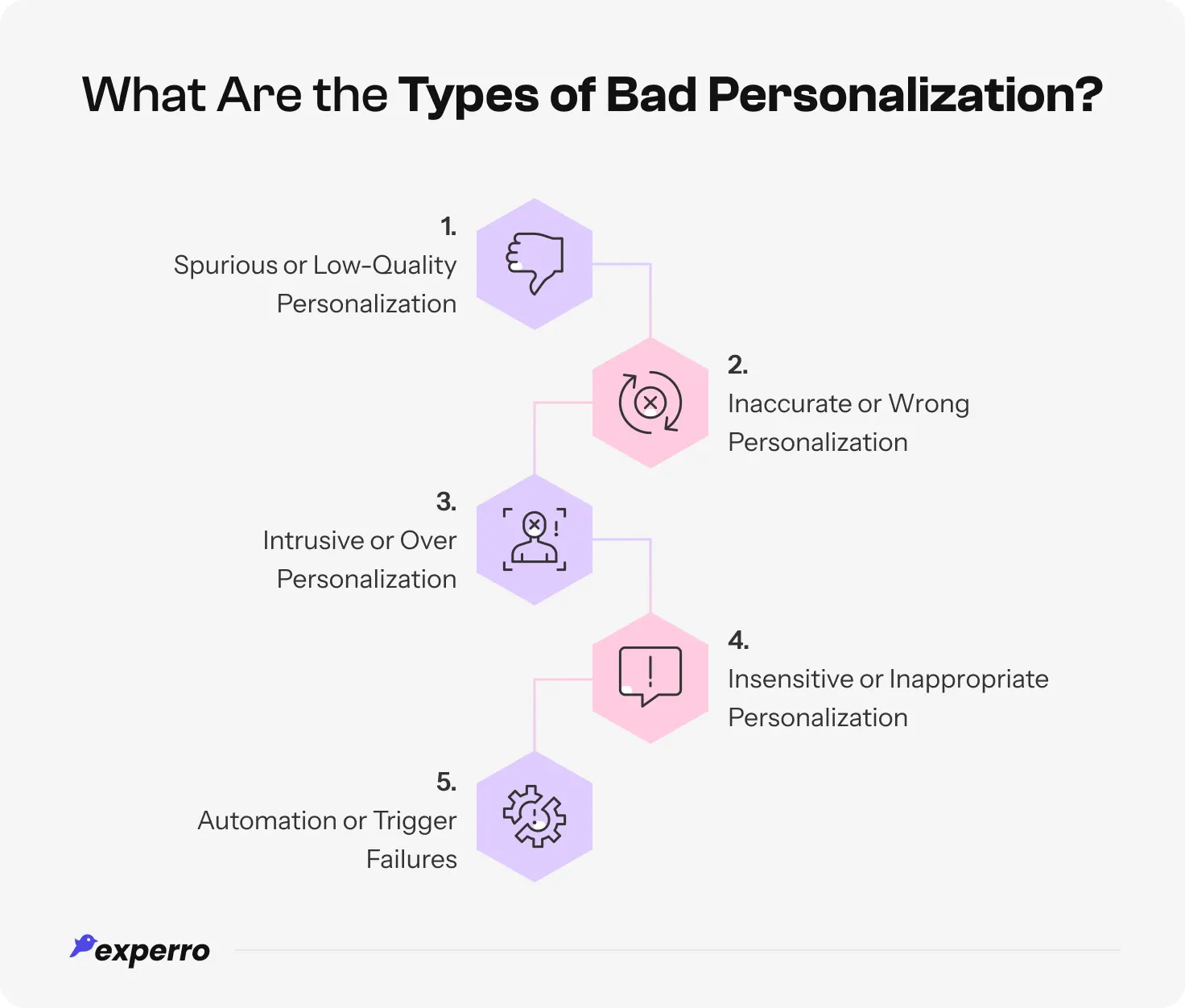
Here are the most common types:
1. Spurious or Low-Quality Personalization
This happens when personalization is driven by weak signals, outdated data, or incorrect assumptions; leading to irrelevant or generic experiences.
Examples include:
- Product recommendations based on months-old browsing history
- Showing “similar items” that have nothing to do with the shopper’s intent
- Assuming interests that aren’t there (e.g., showing baby products to someone who bought a gift once)
This type hurts credibility because it feels random and unhelpful.
2. Inaccurate or Wrong Personalization
This occurs when the system misunderstands context or misinterprets behavior.
Examples include:
- Recommending winter coats to someone browsing swimsuits
- Showing out-of-stock or unavailable products
- Suggesting items from the wrong category, price range, or demographic
These mismatches create friction, frustration, and immediate drop-offs.
3. Intrusive or Over-Personalization
This is the kind of personalization that makes customers feel watched instead of understood, where the brand crosses the line from “helpful” to “creepy.”
Examples include:
- Hyper-specific recommendations after just one click
- Repeating the shopper’s name excessively in content
- Overusing geofencing or location-based prompts
- Pushing too much personal context too soon
In short, helpful becomes invasive, and shoppers pull away since they feel creeped out.
4. Insensitive or Inappropriate Personalization
This happens when personalization touches sensitive categories or makes inappropriate inferences.
Examples include:
- Suggesting life-event-based products without clear signals
- Making assumptions about gender, age, or health conditions
- Personalizing around topics that feel private or controversial
These mistakes can erode trust faster than anything else.
5. Automation or Trigger Failures
Sometimes, “bad personalization” is simply broken personalization.
Examples include:
- Triggering abandoned cart emails after a completed purchase
- Sending “Welcome back!” messages to new customers
- Recommending products that were just returned
- Showing identical recommendations to every visitor
These failures damage customer confidence and show gaps in your data or system setup. The personalization statistics show how one can actually bridge the gap between the customer considering and not considering your brand for further shopping.
What Are the Outcomes Of "Personalization Gone Wrong"?
In one word? Adverse!!!
But the real impact runs deeper:
- Frustrated shoppers who feel misunderstood.
- Harder product discovery and longer paths to purchase.
- Declining conversions and lower engagement.
- Reduced trust in your brand’s recommendations.
- Increased bounce and lost sales to competitors with better experiences.
Bad personalization doesn’t just fail — it actively harms the customer journey.
This is what your customers feel when you are getting personalization wrong.
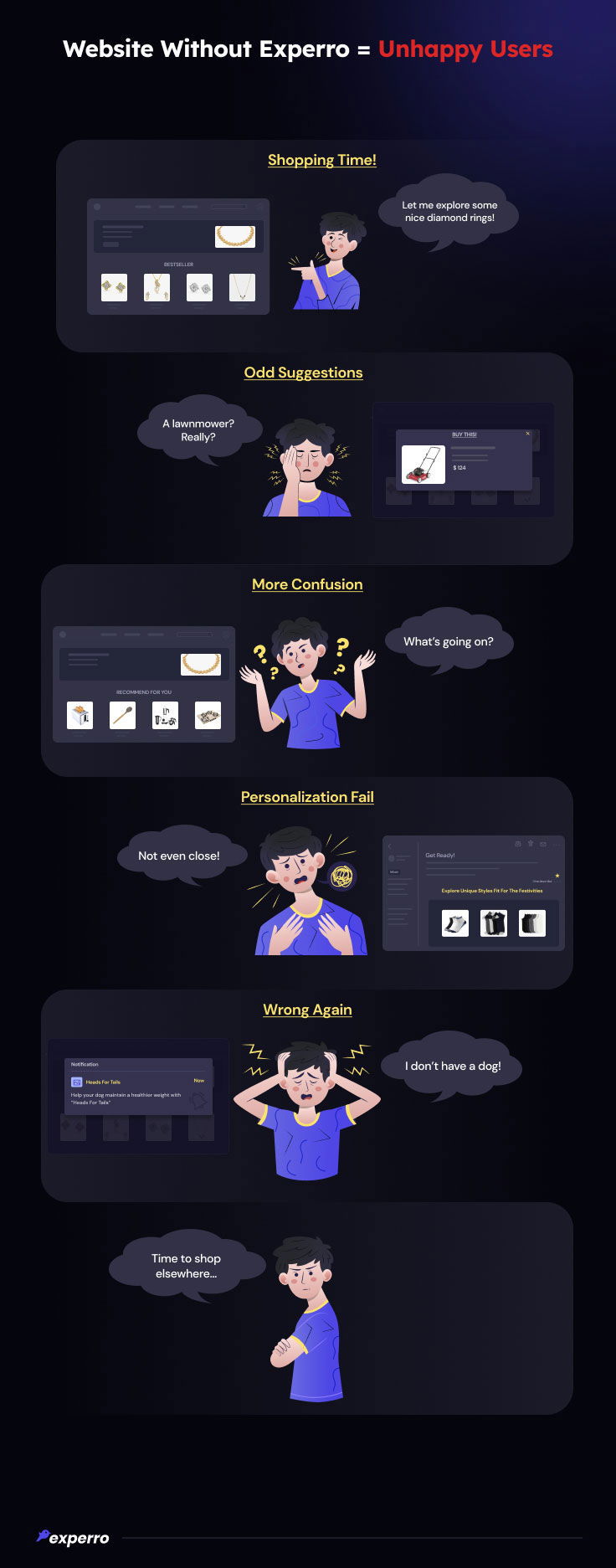
What Are the Common Mistakes That Lead to Bad Personalization?
While personalization has the potential to enhance user engagement, there are numerous ways it can go the other way around if you are getting personalization wring. Understanding these pitfalls is crucial to avoid the consequences of bad personalization.
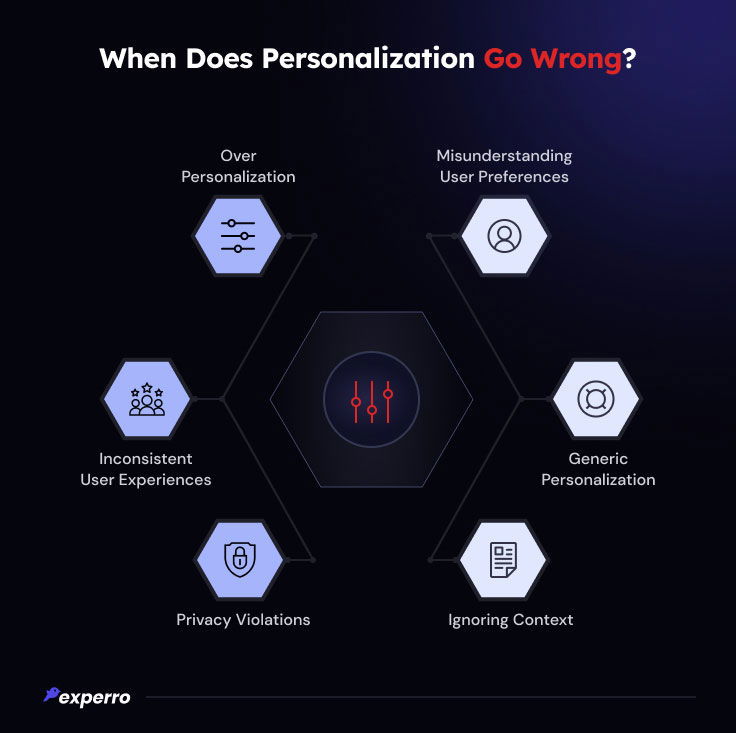
Below are some common scenarios where personalization fails:
1. Over-Personalization
Effective personalization is a delicate balance—too little feels generic, too much feels intrusive.
Over-personalization can quickly become imposing. When companies push too much customization, users can feel creeped out.
For instance, recommending products based on browsing history from months ago might put the user’s shopping vibe off. The cost of bad personalization here is high—it harms trust and damages the brand’s reputation.
Users might start to feel like they’re being watched, leading to a negative response and reduced customer engagement.
2. Misunderstanding User Preferences
Assumptions are shortcuts that lead us down the wrong path.
One of the common mistakes in personalization strategy is assuming what users want without understanding their interests. This leads to ineffective personalization.
For example, recommending baby products to someone who only browsed a single item as a gift can frustrate the user, highlighting the need for better understanding of user behavior.
Such personalization errors not only waste marketing efforts but can also push potential customers away, showing that the brand doesn’t really determine them.
3. Avoid Generic Personalization
Generic personalization fails to address individual needs, leading to a one-size-fits-all approach that doesn’t resonate.
When multiple users come across the same recommendations or content, it becomes clear that the personalization is not tailored.
This kind of bad recommendations can result in users not engaging with the content personalization, thus reducing the effectiveness of your marketing efforts.
The value of getting personalization right—or wrong—is multiplying as users expect more tailored customer experiences.
4. Inconsistency in UX
When personalization is not implemented consistently across channels, it creates inconsistent user experiences.
Imagine a user receives a personalized offer via email but finds no trace of it on the website. This kind of eCommerce personalization error can confuse users and make them doubt the authenticity of the offer.
Personalization gone wrong can lead to lost sales and a decline in customer loyalty.
5. Privacy Violations Are a Major Red Flag!
One of the most serious personalization pitfalls is when it violates privacy. Privacy issues with personalization occur when clients feel their details is being misused or overexploited.
For example, overly aggressive third-party data collection or using customer data in ways the user didn’t consent to can lead to mistrust.
The risk of personalization violating privacy can result in legal repercussions and a damaged brand image.
P.S. - Experro only uses first-party data with due consent from the users in order to personalize the shopping experiences for them.
6. Ignoring Context
Personalization that ignores the context of the user’s current situation can backfire. For example, sending a discount code for winter coats in the middle of summer is a clear AI-driven personalization failure.
Ignoring context shows a lack of understanding of the user's current needs and can lead to ineffective personalization efforts.
The consequences of bad personalization like this include reduced engagement and missed opportunities.
How to Implement Personalization in the Right Way?
To ensure your personalization efforts are effective and resonate with your customers, it's important to follow best practices.
You can avoid poor personalization experience by choosing the right solution from the pool of eCommerce personalization platforms.
By focusing on the capabilities and right strategies, you can avoid the common pitfalls that lead to personalization mistakes.
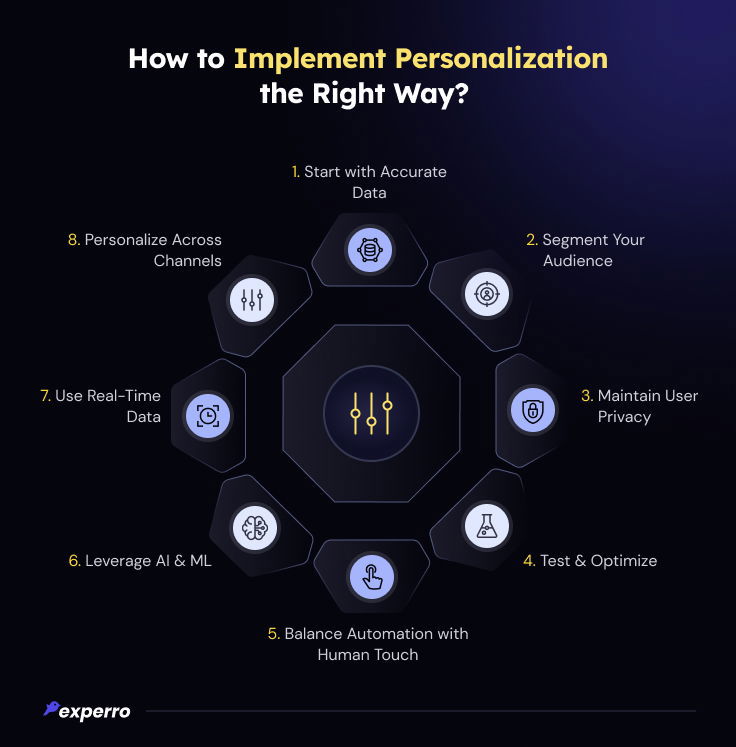
Here are key steps to implementing personalization at scale successfully:
1. Start with Accurate First-Party Data
Start with accurate data to build a strong foundation for your personalization efforts. Using outdated or incorrect customer information can lead to personalization mistakes that disconnect the users.
Ensure your data is up-to-date and relevant to avoid data misuse in personalization. This is crucial to avoid wrong personalization and deliver your users the best possible experience.
2. Segment Your Audience
Segment your audience effectively to tailor experiences based on specific groups. Not all users are the same, and segmenting allows you to address the unique needs of different user groups with transperancy.
This prevents personalization strategy mistakes and enhances the relevance of your personalized marketing efforts. Proper segmentation is key to delivering the best personalization experience.
3. Maintain User Privacy
Maintain user privacy by respecting boundaries and clear consent management for data use.
Avoid privacy issues with personalization by being transparent about how you collect and use data. This approach builds trust and ensures that your personalization efforts do not violate user privacy.
The power of personalization lies in its ability to enhance user experiences without compromising their privacy.
4. Test and Optimize Personalization Strategies
Test and optimize your personalization strategies regularly. This helps you identify what works and what doesn’t, preventing personalization pitfalls.
Continuous testing allows you to refine your approach and avoid AI personalization errors. It’s important to keep improving to deliver a consistently high-quality experience for your users.
5. Balance Automation with Human Touch
Balance automation with a human touch to ensure personalization feels genuine. One of the best ways to achieve this is via agentic personalization.
Integrating human elements into your strategy helps to avoid personalization challenges like generic messaging, creating a more authentic connection with your audience.
6. Personalize Across Channels
Omnichannel personalization is crucial to provide a seamless experience for your users across channels. Consistency is key to avoiding inconsistent user experiences.
Whether it’s through personalized emails, your website, or social media, ensure your omnichannel personalization strategy is unified across all touchpoints. This helps avoid eCommerce personalization errors and ensures your messaging is coherent and effective.
7. Leverage Artificial Intelligence and Machine Learning Technology
Utilize AI and ML technology to enhance the precision of your personalization efforts. These technologies can help you better understand user behavior and predict their needs, reducing the likelihood of personalization failure.
However, be cautious to avoid AI personalization errors by ensuring that the AI is trained on accurate, relevant data.
8. Use Real-Time Data
Use real-time data for personalization that’s relevant to the moment. Ignoring context is a common personalization mistake that can be avoided by leveraging up-to-date information.
According to Google, 90% of top marketers believe that personalization is a crucial matter in boosting store profitability.
Because, real-time data ensures that your recommendations and content are timely, increasing their effectiveness and reducing the chance of wrong personalization.
Avoid Getting Personalization Wrong — Do It Right With Experro!
Think of a website experience tailored to every visitor. Experro makes that possible. Powered by a Gen AI personalization engine, the platform ensures every customer's interaction with your brand is meaningful and relevant, making it the ultimate choice for enabling hyper-personalization.
The platform’s strong focus on user's permission-based privacy helps you avoid privacy issues with personalization, maintaining trust while delivering customized experiences.
This approach helps you sidestep common personalization pitfalls, such as inconsistent user experiences and incorrect product recommendations, ensuring every interaction enhances customer satisfaction and loyalty.
It is safe to say that if you are not personalizing using Experro, you are not personalizing to delight your customers at all!
Conclusion
Personalization is powerful, but only when executed correctly. The cost of bad personalization is high, from lost sales to damaged brand reputation.
By understanding the common pitfalls and implementing the best personalization practices, you can avoid the consequences of bad personalization.
Platforms like Experro provide the features and insights to deliver the best personalization experience. They help you avoid personalization mistakes by leveraging AI and data-driven strategies.
You can transform your website personalization strategy into powerful customer satisfaction and loyalty with the right approach.
Connect with us on a call for more information on hyper-personalization with Experro.
FAQs

Pallavi is an ambitious author recognized for her expertise in crafting compelling content across various domains. Beyond her professional pursuits, Pallavi is deeply passionate about continuous learning, often immersing herself in the latest industry trends. When not weaving words, she dedicates her time to mastering graphic design.
Subscribe to Our Newsletter!
Get the latest insights delivered straight to your inbox.