- Generative AI
- Product Discovery
- Search
- eCommerce
- 6 min read
Why Electronics Shoppers Can't Find What They Need
Published
14 April 2026

core insights box
- Electronics shoppers search for outcomes, but catalogs are organized by specs. Traditional search can't bridge that gap.
- Spec-heavy filter menus force shoppers to decode technical jargon before they can even browse, stalling purchase decisions at the top of the funnel.
- When discovery fails, high-intent shoppers bounce silently to Amazon or Google; a revenue leak most retailers never trace back to search.
The average electronics store carries thousands of SKUs across dozens of product lines. Specs overlap, model names blur together, and somewhere in that maze, a shopper who just wants a laptop for video editing is scrolling through 400 results sorted by "relevance 🙄" — none of which actually feel relevant.
This isn't a selection problem. It's a discovery problem. And for most electronics retailers, it's bleeding revenue in ways that never show up on a dashboard.
Where Traditional Electronics Discovery Breaks Down?
Every electronics retailer has the inventory. The problem is what happens between a shopper's search query and the product that actually fits their needs.
From keyword-only search engines to personalization models that don't understand upgrade cycles, the discovery layer in most electronics stores is built for a different kind of shopper.
1. The Query-to-Catalog Mismatch
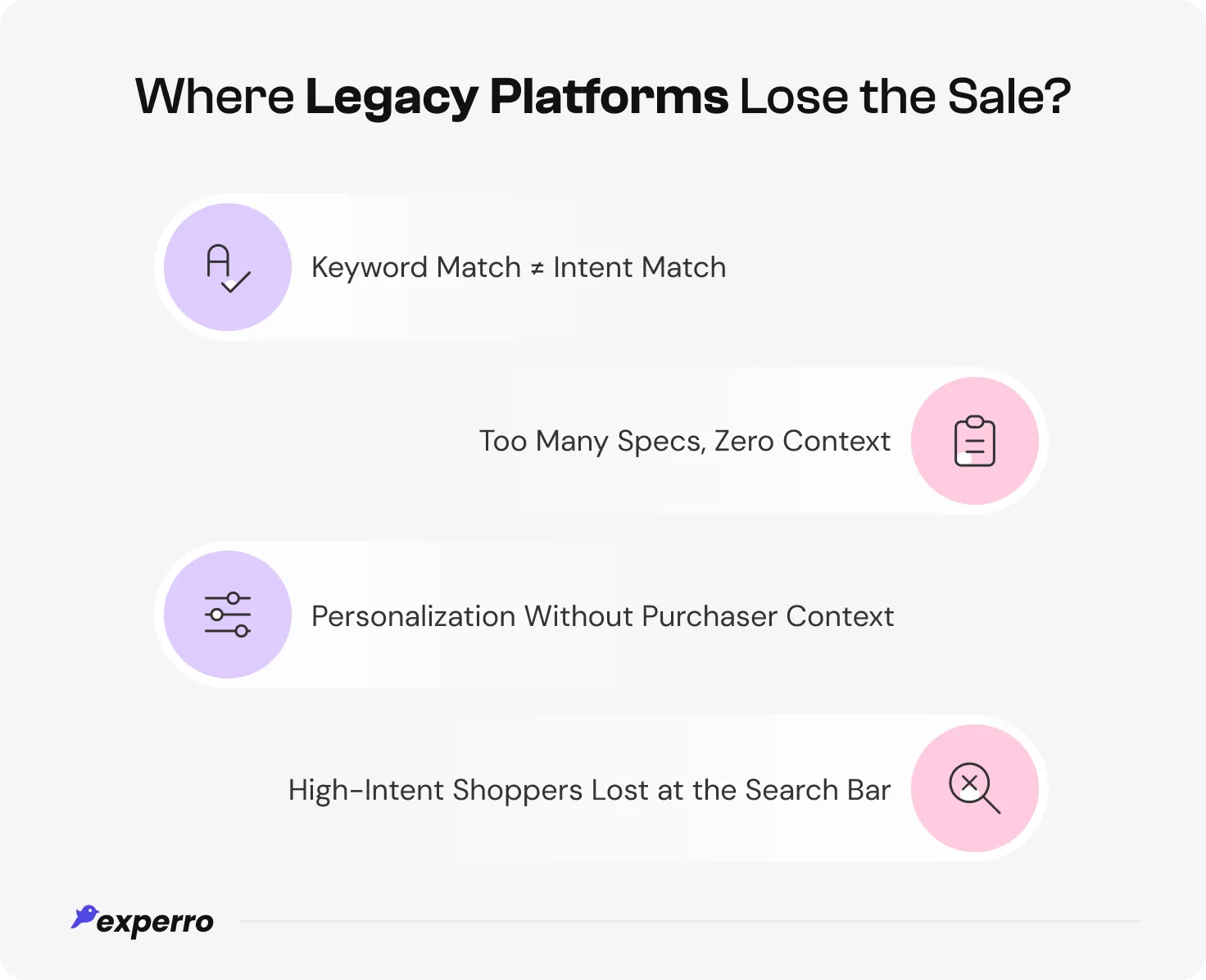
Electronics shoppers don't search the way product databases are structured. They type "good camera phone under $50k" or "quiet gaming laptop for dorms". These are intent-rich, spec-agnostic queries. They describe outcomes, not attributes.
Traditional search engines weren't built for queries with real detail. They're built to match keywords to catalog fields like brand, category, and price range. They can't interpret that "quiet" means fan noise under 40dB, or that "good camera" means 50MP+ with optical image stabilization.
So, the shopper gets a wall of results that technically contain those words but miss the point entirely.
This is where most electronics retailers lose the sale; not at checkout, but at the search bar. The gap between how people describe what they want and how product data is organized is wide enough to drive your highest-intent traffic straight to a competitor.
2. Spec Overload Paralyzes Decisions
Electronics is one of the few verticals where shoppers are expected to become part-time engineers before they can buy.
RAM speed, refresh rate, wattage, chipset generation, connectivity protocols, the spec sheet reads like a technical manual, and the filter menu isn't much better.
A shopper looking for a monitor gets hit with 12 filter options before seeing a single product. They're asked to choose between IPS, VA, and OLED panels without understanding the trade-off.
They're filtering response time without knowing what "1ms GtG" actually means for their use case.
Most retailers treat this as a design problem — add tooltips, redesign the sidebar, collapse a few menus. But the real issue is upstream. The traditional discovery layer itself doesn't understand what the shopper is trying to do. No amount of UI polish fixes a search engine that forces technical fluency as a prerequisite to browsing.
3. Personalized Recommendation Mismatches in Electronics Buying
Most eCommerce recommendation engines were designed for fashion and grocery; verticals with short purchase cycles and consistent taste profiles. Electronics doesn't work that way, and the mismatch shows.
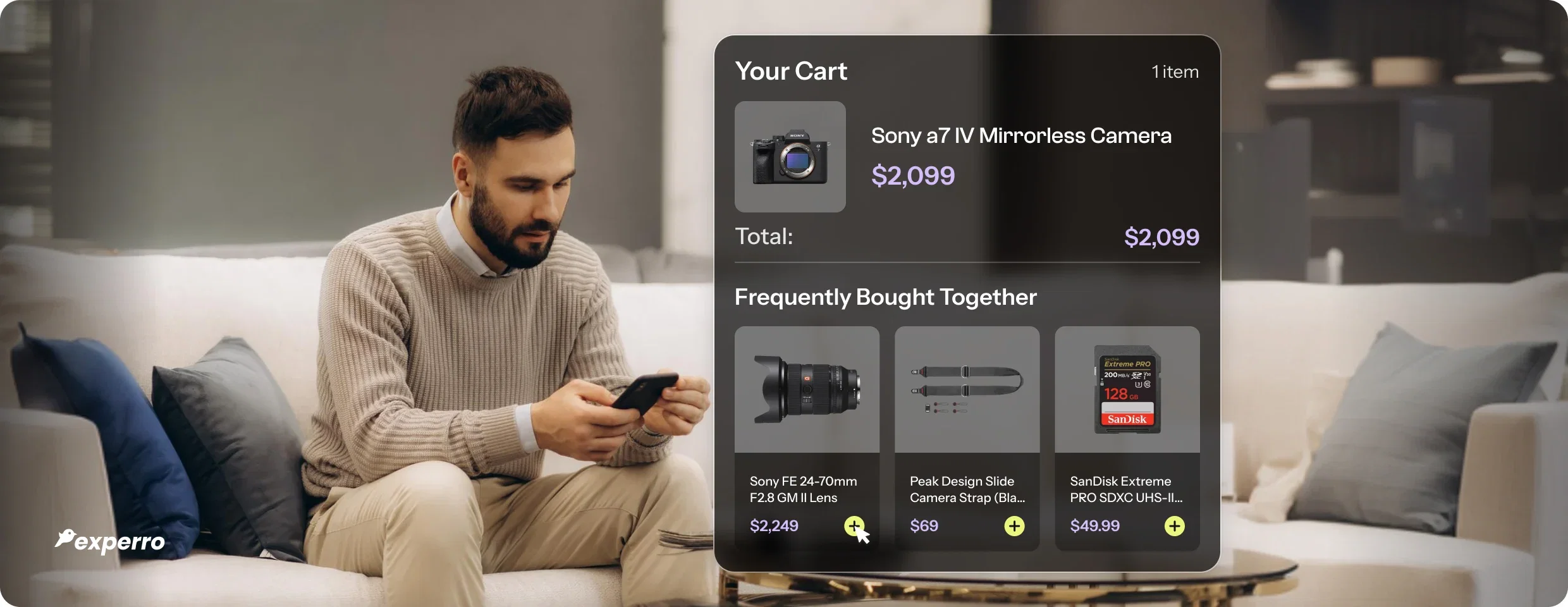
A shopper who bought a DSLR camera six months ago doesn't want another camera. They want lenses, memory cards, a tripod, and maybe editing software. A customer who just purchased a gaming console needs accessories for that specific model, not a carousel of competing consoles from rival brands.
Generic "recommended for you" blocks fail in electronics because they rely on surface-level behavioral signals. What you clicked, what you bought, what other shoppers like you purchased.
None of that captures the product graph underneath — the dependencies, upgrade paths, and compatibility constraints that drive electronics buying decisions.
When your personalization engine suggests a second washing machine to someone who bought one last month, it's not just unhelpful. It signals to the shopper that your store doesn't understand them at all.
4. Search Abandonment Is the Revenue Leak You Can't See
When discovery fails in electronics, shoppers don't file complaints. They leave. They open a new tab, run the same query on Google or Amazon, and buy it from there.
The retailer never understands the lost sale root cause. Results? A bounce rate that keeps climbing and a conversion rate that won't move, without any clear signal pointing to search as the root cause.
This matters more in electronics than in most verticals. Search-driven shoppers convert at 2–3x the rate of casual browsers, but only when search delivers.
When it doesn't, you're hemorrhaging your most valuable traffic, i.e., the people who showed up already knowing what they wanted to buy.
For retailers running tight hardware margins, that's not a minor optimization gap. It's a structural flaw in the revenue funnel.
What Fixing Electronics Discovery Actually Looks Like?
Solving this isn't about better keyword matching or more filter options. It requires a discovery layer that understands natural language, maps shopper intent to technical specs, and personalizes results based on real product relationships — not just browsing history.
Gen AI search does exactly this. When a shopper types "best tablet for architecture students", it doesn't just search for "tablet" and sort by popularity. It weighs display color accuracy, stylus compatibility, processing power for CAD applications, and portability — then surfaces results that match the query's meaning.
Gen AI personalization picks up where search leaves off. It understands where each shopper sits on their buying journey and what they need next. A first-time visitor researching laptops sees comparison-friendly layouts. A returning customer who bought a specific camera model sees compatible lenses and accessories, not a repeat of what they already own. The storefront adapts to purchase context, not just click patterns.
Together, these capabilities turn a static product catalog into a storefront that responds to how electronics shoppers think, search, and buy. And, there’s nothing better than Experro's electronics product discovery experience in the market currently.
Conclusion - ‘Discovery Gap’ Is Your Competitor's Blind Spot
Most electronics retailers are running the same search infrastructure they set up years ago. Keyword match. Manual merchandising rules. A filter sidebar with 15 options nobody uses. It works fine for the shopper who already knows the exact model number. It fails everyone else.
That "everyone else" is the majority of your traffic — shoppers in research mode, gift buyers, customers upgrading from a product they bought three years ago and can't remember the specs of.
The retailers who close this gap don't just improve conversion metrics. They capture the shoppers that every other store in the category is losing.
To learn more about how Experro can help you improve the conversions, book a demo with us and we will walk you through everything.

Ekta holds over 6 years of experience in marketing, SEO, AIO, GEO, and SERP optimization. She combines strategic content planning with hands-on execution to drive results. Known for her dedication and attention to detail, Ekta ensures every piece of content delivers value to readers. When she's not crafting content strategies, you'll find her practising yoga or petting dogs!
Subscribe to Our Newsletter!
Get the latest insights delivered straight to your inbox.