- Generative AI
- Product Discovery
- eCommerce
- 8 min read
How AI in Fashion Is Pushing Retail Sales Further Up
Published
12 August 2026

major insights of blog
- AI helps fashion retailers move beyond one-size-fits-all experiences by matching products to shopper intent, style preferences, and context.
- Searches, clicks, and browsing behavior become actionable signals for improving product discovery, personalization, and merchandising.
- AI makes large fashion catalogs easier to navigate by helping shoppers find relevant products without relying on exact keywords or endless browsing.
- Experro brings AI-powered search, personalization, recommendations, and merchandising together to help fashion retailers turn discovery into measurable growth.
A shopper typed "cropped denim jacket, not too baggy" into a search bar. What came back was almost exactly what she'd pictured. That's not luck. That's AI in fashion eCommerce doing its job.
This is where shopper expectations have landed. A half-finished sentence should return a full answer. A photo should work as well as a paragraph of description. And increasingly, the store should already have a sense of someone's style before they've said anything at all.
The payoff isn't just smoother browsing, shoppers who try on products virtually convert 50% more often than those who don't.
So, the real question for your brand isn't whether to adopt AI. It's how much ground you're already losing to competitors who have.
This guide breaks down what AI in fashion eCommerce really means, why it matters, and how to put it to work today.
What Is AI in Fashion eCommerce?
AI in fashion eCommerce is the use of artificial intelligence to make online fashion shopping and retail operations smarter, faster, and more personalized.
It helps you understand shoppers’ preferences, search intent, product interactions, and buying behavior to deliver more relevant experiences.
AI can power product search, personalized recommendations, visual search, conversational shopping, merchandising, product tagging, and demand forecasting. For example, when your shoppers search for “casual summer dress under $100”, AI can understand their intent and help them find relevant products faster.
Simply put, AI helps fashion eCommerce brands connect you with the right products at the right time while making product discovery easier and the overall shopping experience more relevant.
What Are the Benefits of AI for Fashion eCommerce Brands?
What can AI actually do for your fashion business? From spotting emerging trends to understanding shopper behavior and optimizing inventory, AI in fashion helps brands make smarter decisions across the fashion retail industry.
Here are the key benefits of AI for fashion ecommerce, from improving product discovery to responding to demand earlier.
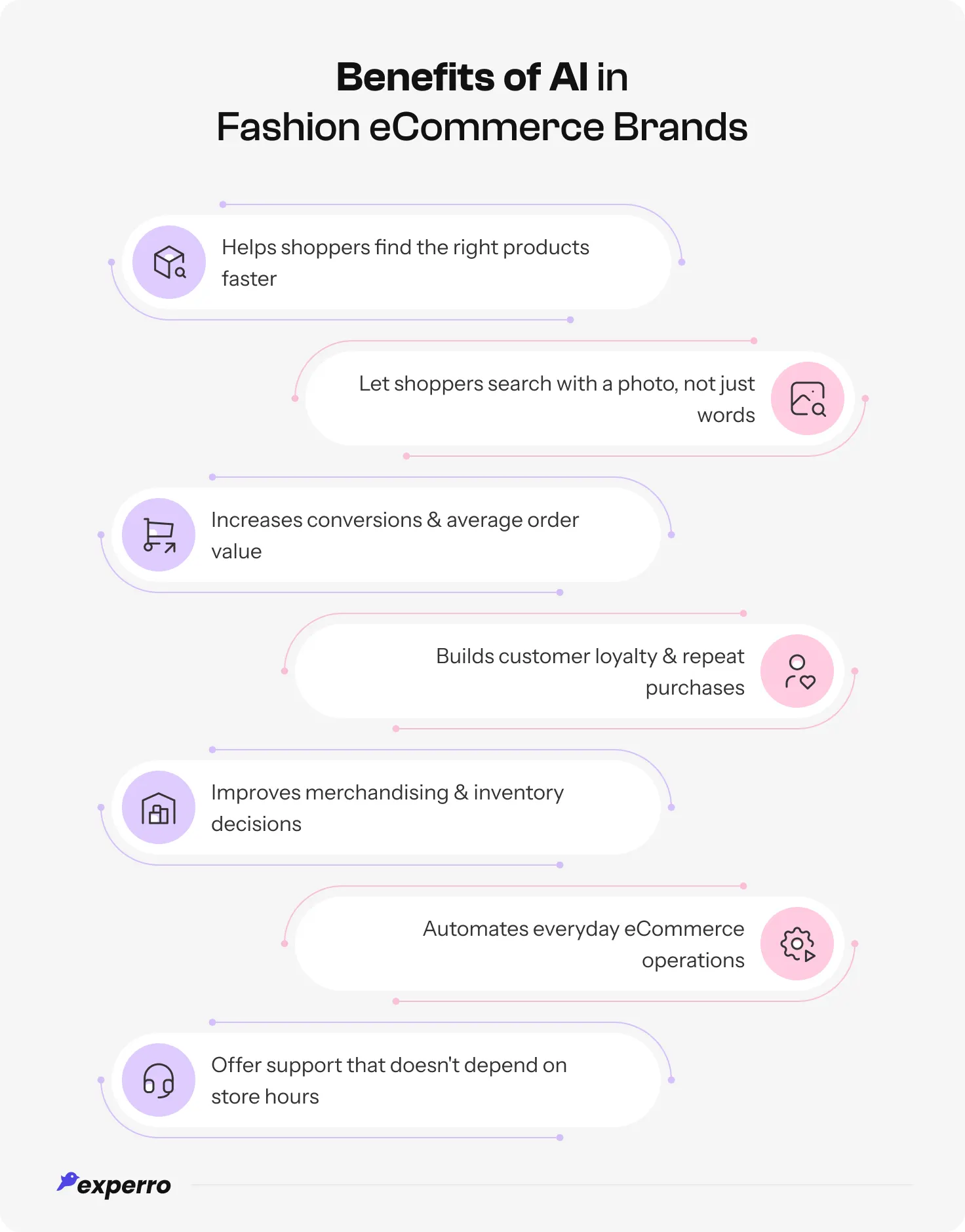
1. Help Shoppers Find What They're Looking For
A shopper searches "something for a beach wedding" and gets nothing useful back. That's a sale your marketing budget already funded, walking away. AI search for fashion stores understands intent, not just keywords, and shows her real options instead.
It's a small fix with an outsized return. Search relevance is where it shows up first and predictive search keeps it sharp over time.
2. Let Shoppers Search with a Photo, Not Just Words
Not every shopper thinks in words. Some have a photo saved and no idea how to describe it. Visual search fashion eCommerce closes that gap, letting her upload the image and get matches back instantly.
AI-powered visual search alone can lift conversion rates by up to 20% for fashion retailers, and pairing it with multimodal search turns three habits, photo, voice, and text, into one smooth path to checkout.
3. Increase Order Value Without Relying on Discounts
Discounting works until it doesn't, and it's the hardest lever to let go of once shoppers expect it. AI personalization in fashion retail offers a better path: recommendations built from real behavior, not blanket promo codes.
Done right, they read as styling advice, not deliberate upselling. Fashion brands using advanced AI personalization report 20 to 40% higher average order value compared to non-personalized experiences and real-time personalization keeps every visit feeling considered.
4. Reduce Returns and Build Repeat Customers
Ask any ops lead where margin quietly disappears, and returns sit near the top, mostly driven by fit. AI in clothing retail can narrow that gap by using order history, size data, and shopper behavior to recommend the right size before checkout.
Get the first purchase right, and something shifts. By using AI personalization for fashion eCommerce to make the experience more relevant, brands can reduce purchase friction, build trust, and give shoppers a reason to come back for a second purchase.
5. Make Better Inventory and Merchandising Decisions
Buy too much of the wrong color, and it sits losing value every week. Buy too little of a bestseller, and you lose sales you already paid to generate.
AI in fashion merchandising uses live data to predict demand SKU by SKU, helping brands make smarter AI applications in fashion retail decisions instead of relying on last season’s guess.
Merchandisers still make the calls. Digital merchandising gives them sharper information to respond to AI in fashion retail trends and changing shopper demand.
6. Offer Support That Doesn't Depend on Store Hours
Round-the-clock support usually means round-the-clock payroll, until it doesn't. An AI fashion shopping assistant answers a sizing question at 2 a.m. as confidently as your best associate does at noon.
Brands using agentic AI in fashion retail have seen loyalty climb by as much as 89 percent, since every interaction feels personal, not scripted. See how AI shopping assistants handle this in practice.
7. Free Up Your Team's Time for Higher-value Work
Product descriptions. Broken images. Categories quietly underperforming without anyone noticing. This fills a team's week without moving the business forward, and generative AI in fashion retail can now handle most of it directly.
This is agentic AI in fashion retail in action, AI agents that act instead of just flagging tasks, letting smaller brands compete on the same AI-driven fashion tech as much larger retailers.
The impact of AI in fashion industry is especially visible in the AI in fast fashion industry, where brands use real-time demand signals to respond faster to trends, personalize discovery, and optimize merchandising.
Where AI in Fashion Extends Beyond Your Storefront
How can AI be used in retail beyond just your product pages? The use of AI in fashion spans a lot more than search and merchandising alone, and it helps to know where your storefront fits into that bigger picture.
- Content and imagery: The rise of AI in the fashion industry is also changing how brands create product content and imagery, complementing product data enrichment and traditional product photography.
- Design and product development: Some fashion companies now use generative AI for fashion design, creating mood boards, and visualizing emerging design trends before a single sample is sewn.
- Textile and supply chain: AI in the fashion retail industry can connect changing shopper demand with production decisions, helping brands plan suppliers better and reduce textile waste.
- In-store technology: A few flagship retailers are pairing AI with smart mirrors and other physical store tech. As AI in fashion retail trends 2026 continue to evolve, though, much of the practical growth in AI for clothing retail is still happening online.
You don’t need to tackle every AI use case in fashion retail at once. Understanding how these applications connect can help you identify where AI in fashion can create the most value and build a stronger case for investment across your business.
How Does Experro Help Fashion Brands Deliver AI-powered Shopping Experiences?
You probably have a few honest concerns before handing any of this to a platform, and these are some of the most common challenges of AI in the fashion industry teams raise. Will it replace your merchandising team? Will it feel robotic to shoppers? Will implementation eat up a year of engineering time?
Fair questions. You have seen what AI in fashion eCommerce can do. Now let's talk about how to use AI in retail without a year-long platform migration. This is where Experro's fashion product discovery platform comes in.
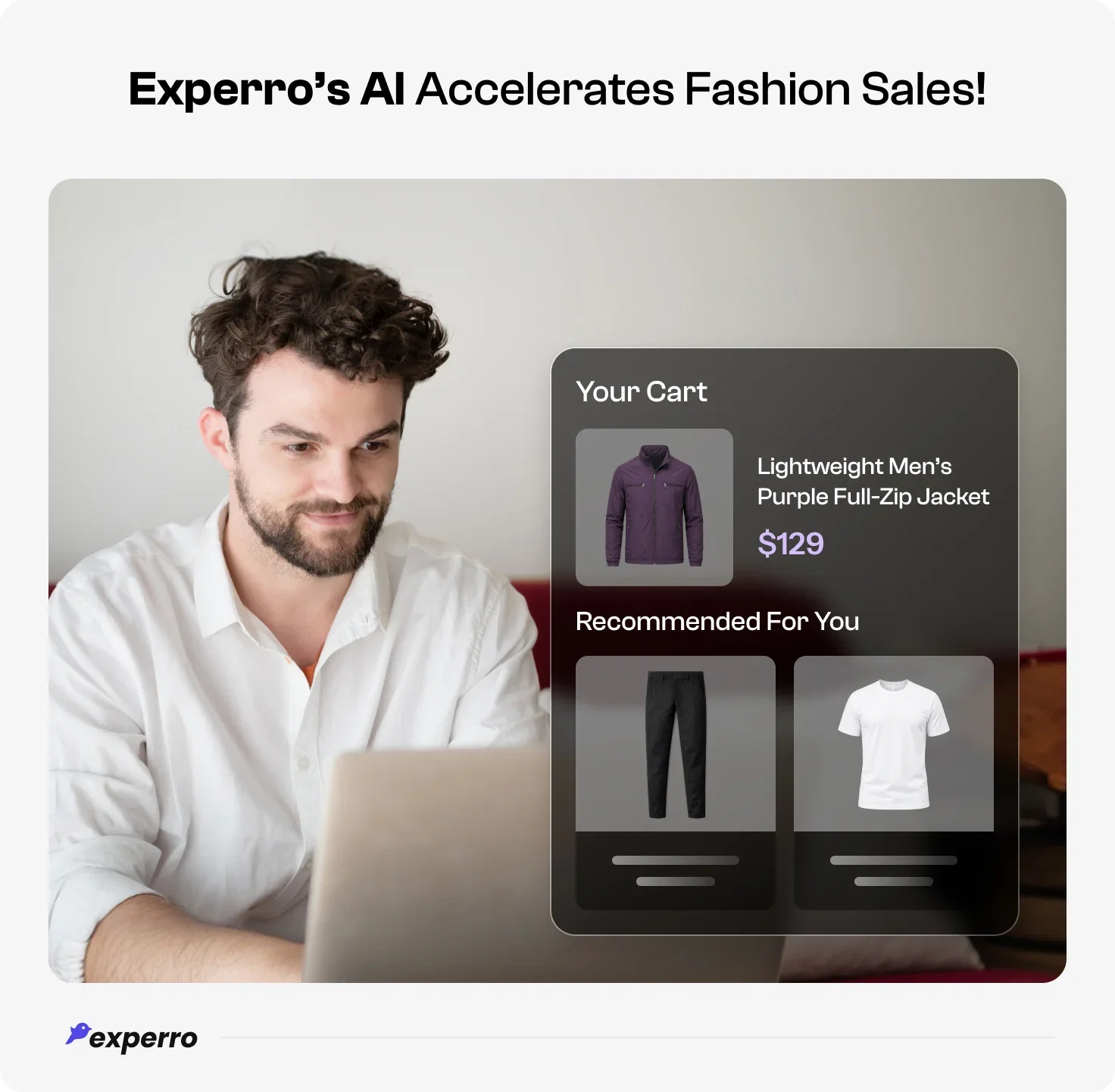
- Understand What Shoppers Actually Mean: Experro's Gen AI search reads intent, not just keywords, turning dead-end searches into real results.
- Personalize Every Shopper's Journey: With Experro, AI personalization for fashion eCommerce uses real behavior to turn recommendations into styling advice, not guesswork.
- Keep Merchandising Moving as Fast as Fashion Does: Experro's AI merchandising for apparel brands lets your team pin, boost, or bury products in seconds, with full override control.
- Replace Tool Chaos With One Connected System: Search, personalization, and merchandising work as one inside Experro, so your team isn't managing five vendors to do one job.
- Never Clock Out on Customer Support: Experro's AI shopping assistant answers sizing questions at 2 a.m., with brands reporting loyalty gains of up to 89 percent from this kind of always-on support.
This is what makes Experro's approach to AI applications in fashion retail different from a single point-solution plug-in. It is one system built for fashion companies specifically, not retrofitted from a generic retail template.
Conclusion: Why AI Will Define the Future of Fashion eCommerce
Fashion shoppers don’t want to work hard to find what they like. They want relevant products, helpful answers, and a shopping experience that feels like it understands them. That’s where AI is making a real difference in fashion eCommerce.
From smarter search and personalized recommendations to visual discovery and conversational shopping, AI helps remove the guesswork from product discovery. It also gives brands new ways to understand shopper intent and create more relevant experiences at every stage of the buying journey.
The opportunity isn’t about adding AI simply because it’s trending. It’s about using it where it can genuinely make shopping easier, product discovery faster, and your eCommerce experience more effective.
Want to see where AI could make the biggest difference in your fashion store? Contact us to explore practical ways to improve product discovery, personalization, and the overall shopping experience.
FAQs

With 6+ years of experience in AI, software, and digital transformation across tech, healthcare, and fashion, Rahul focuses on making complex ideas simple, clear, and actually useful. He has learned how often great ideas get lost in complexity, which is why he centers his writing on clarity, helping entrepreneurs and leaders cut through noise and make decisions with confidence.
Subscribe to Our Newsletter!
Get the latest insights delivered straight to your inbox.