- Personalization
- eCommerce
- 11 min read
How To Scale Omnichannel Personalization Across Every Channel
Published
27 August 2024Updated
14 July 2026

core insights box
- Omnichannel personalization connects customer data, context, and intent across every touchpoint to deliver a unified and continuous brand experience.
- This approach improves customer experience, boosts AOV, and optimize marketing spend by ensuring interactions remain relevant and consistent across channels.
- For enterprise brands, omnichannel personalization translates into a more connected approach to personalizing customer interactions across channels.
- Experro simplifies omnichannel marketing, making it easy for brands to unify data and deliver real-time personalization at scale.
Imagine a digital storefront that automatically rearranges itself based on a customer's recent social media likes, or an email that updates its discount the moment someone walks into your physical store.
This isn't a futuristic dream anymore; it’s the new baseline for commerce. Modern shoppers don't see "channels", they just see your brand, and they expect you to recognize them everywhere.
Omnichannel personalization has evolved from a flashy marketing tactic into the core engine of digital growth. It’s about moving past fragmented data and creating one single, continuous conversation with your buyer.
If your data isn't moving as fast as your customers are, you aren't personalizing, you’re just guessing. To win today, your brand needs a "brain" that connects every touchpoint in real-time.
And that brain is a unified experience platform like Experro that brings every customer interaction together across channels, touchpoints, and data sources so brands can deliver consistent, personalized, and intelligent experiences in real time.
Let's dive deep into what omnichannel personalization actually looks like in the modern retail landscape.
What Is Omnichannel Personalization?
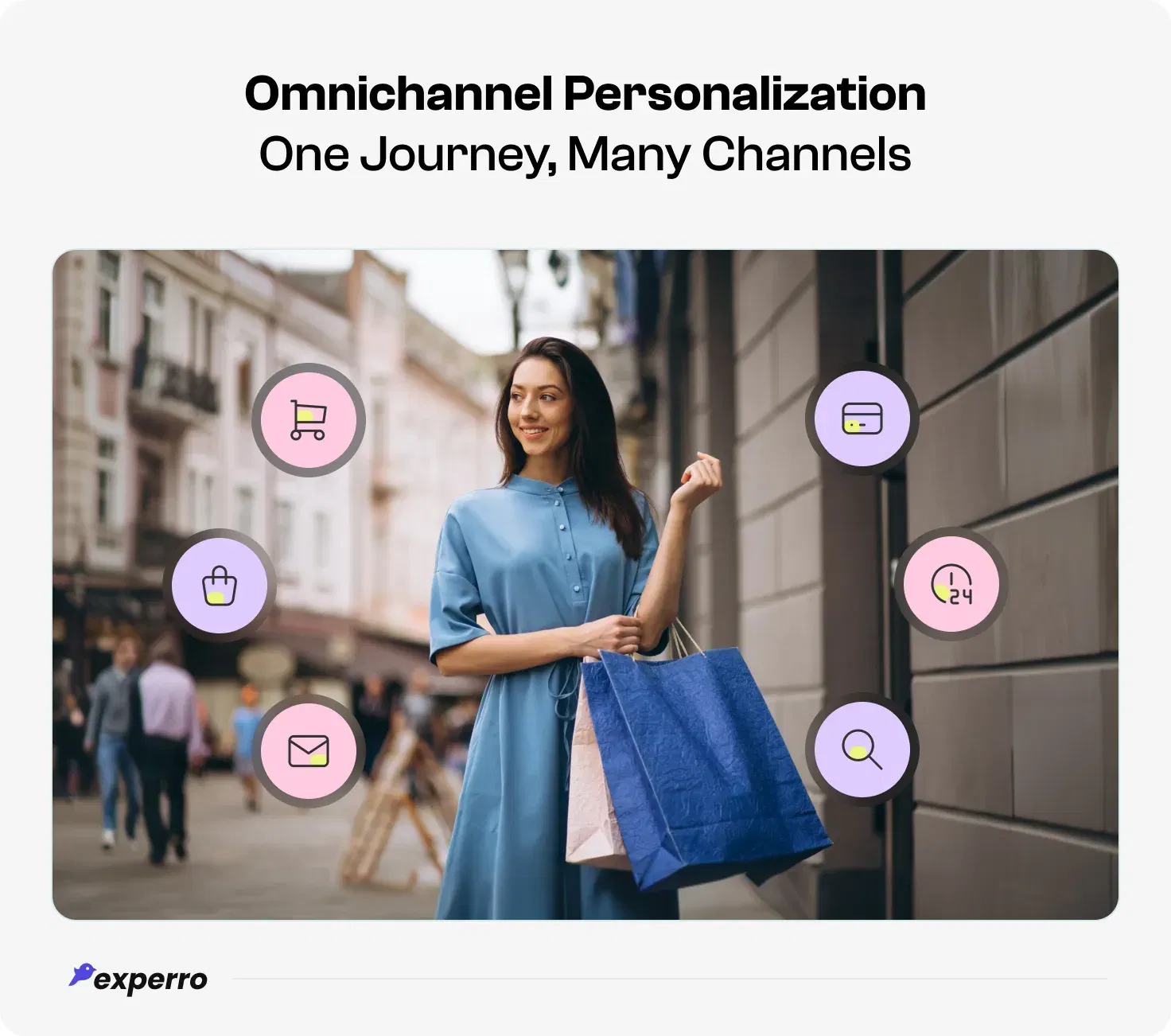
Omnichannel personalization unifies customer data across all touchpoints like web, mobile, app, email as well as physical store to deliver a personalized and consistent 1:1 experience.
Instead of treating each platform as a separate silo, it ensures that every interaction feels like tailor-made conversation that picks up exactly where the customer last left off.
It essentially turns your brand into a single, living entity that:
- Recognizes the user instantly, regardless of the device.
- Remembers their past behavior and current intent.
- Responds with the most helpful next step in their journey.
Ultimately, this isn't just about showing "Recommended Products." It is about using a robust omnichannel personalization platform like Experro to build a bridge between the digital and physical worlds, ensuring the customer's journey feels like one smooth, uninterrupted path toward a purchase.
Omnichannel Personalization Examples
The omnichannel personalization examples illustrate how businesses tailor customer experiences across different channels.
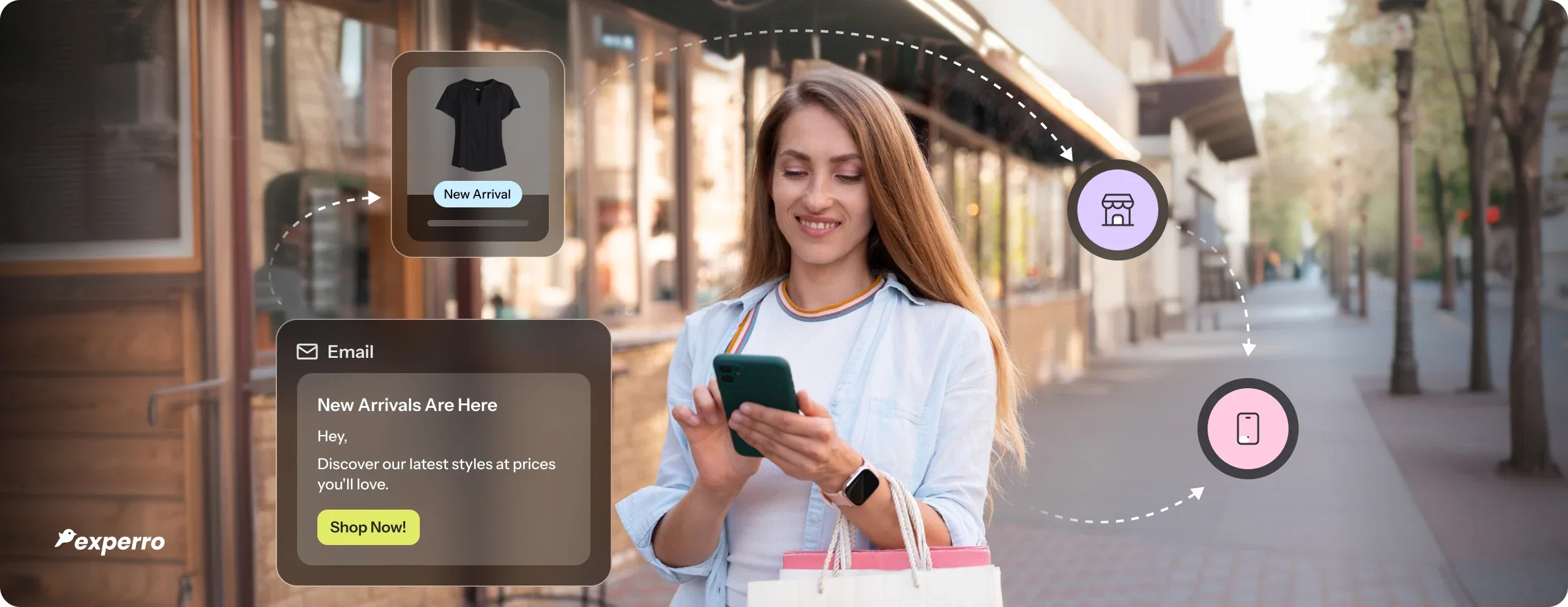
Example 1 – In a furniture retail customer experience, a shopper adds a living room set to their cart on a mobile app but leaves without buying, an hour later, they receive a personalized email with a 10% discount code for those exact set. When they eventually walk past a physical store, a location-based push notification reminds them that the set is currently set up in the showroom, inviting them to come sit on the sofa and experience the fabric in person.
Example 2 – By using AR in jewelry to virtually try on a specific gemstone ring, a shopper receives a real-time notification that the exact piece is available for a private viewing at a nearby boutique. When they enter the store, a stylist greets them with the ring already prepared, using the shopper's AR history to suggest matching earrings or necklaces that fit the same design aesthetic.
These examples highlight how omnichannel personalization turns isolated data points into a cohesive journey, ensuring that omnichannel ecommerce feels less like a series of transactions and more like a continuous, high-touch brand experience.
What Is the Difference Between Omnichannel & Cross Channel Personalization?
Understanding the difference between omnichannel and cross-channel personalization is essential for businesses looking to boost customer engagement.
Both strategies aim to enhance the entire customer journey but differ in scope and execution.
Below is a table outlining the key differences between omnichannel vs. cross-channel marketing personalization.
Aspect | Omnichannel Personalization | Cross-channel Personalization |
|---|---|---|
| Definition | Omnichannel customer personalization creates a unified experience across all channels. | Cross-channel personalization focuses on maintaining consistent messaging and branding across different channels, but not all. |
| Scope | Broad, covering every possible touchpoint including in-store, online, email and mobile to create a cohesive journey. | Limited to selected channels, generally focusing on a few key platforms where the brand has a strong presence. |
| Integration | Requires deep omnichannel integration personalization to unify customer data across all platforms. | Involves integration across specific channels but may lack the continuity of an omnichannel approach. |
| Technology | Often supported by omnichannel personalization software and platforms. | Uses simpler tools that manage personalization across selected channels but without data integration of an omnichannel engine. |
| Customer Experience | Provides a seamless, unified experience across all touchpoints, leading to hyper-personalized omnichannel marketing. | Ensures consistency in messaging but may not provide seamless integration across different customer touchpoints. |
| Use Case | Ideal for businesses who operate across multiple platforms, to unify fragmented data into a single customer view can such that it can anticipate needs before the customer even voices them. | Suitable for businesses that want to maintain consistent branding and messaging across selected channels without full integration. |
| Challenges | Slightly high implementation costs and complexity, requiring significant investment in omnichannel personalization platforms. | Easier to implement but may not fully meet customer expectations for a unified experience. |
Gain a competitive edge by identifying the structural differences between multichannel and omnichannel strategies and how they impact your overall business scalability.
What Are the Benefits of Omnichannel Personalization?
In an era of fragmented attention, omnichannel personalization provides brands with the infrastructure to deliver a unified brand story, ensuring consistency and relevance across an ever-evolving digital landscape.
There are numerous benefits of omnichannel hyper-personalization including:
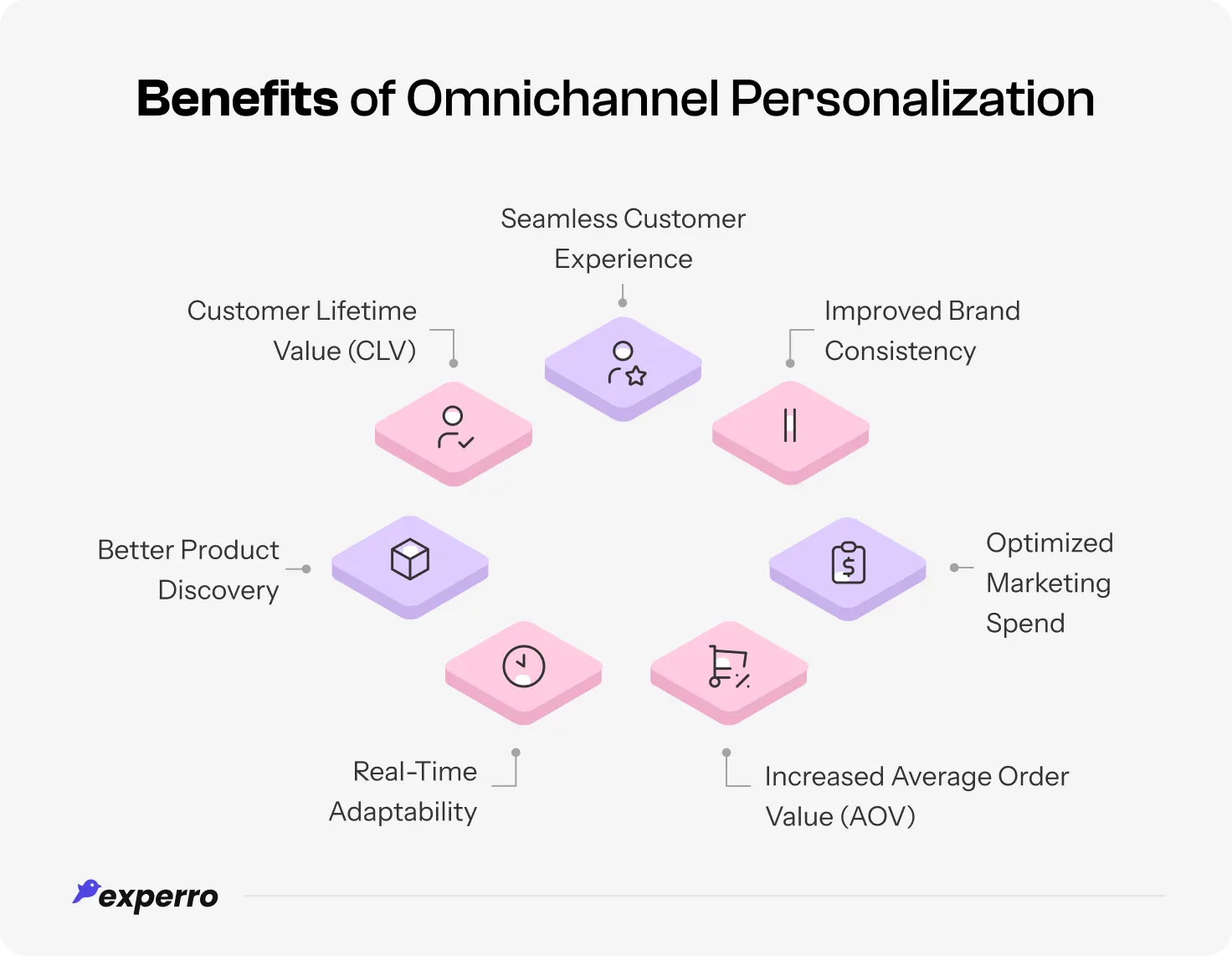
1. Offers Frictionless Customer Experience
Personalization that spans every channel eliminates friction and strengthens the customer journey. Whether a customer interacts with your brand online, in-store, or through mobile apps, the omnichannel customer experience remains consistent and relevant.
This seamless integration is possible through omnichannel personalization platforms like Experro that connect customer data from various digital touchpoints.
Experro’s Customer Data Platform (CDP) brings all your scattered customer data together into one unified profile. This unified view lets Experro instantly recognize each shopper and deliver a seamless, consistent experience, whether they’re browsing your website, checking an email, or using your mobile app.
As a result, customers feel understood and valued, leading to higher satisfaction and loyalty. Real-time data from omnichannel personalization software plays a crucial role in improving the customer experience.
2. Improved Brand Consistency
Personalization strengthens brand management by delivering consistent messaging and tailored offers across all channels.
This approach ensures that customers perceive your brand the same way, regardless of where they engage. Omnichannel integration personalization helps businesses maintain this consistency by unifying data silos and personalized communication strategies.
Experr's omnichannel personalization engine can streamline digital marketing campaigns and other efforts. This ensures your brand's voice and values are reflected across all touchpoints consistently.
3. Optimized Marketing Spend
Businesses can optimize their marketing spend by targeting the right customers with personalized messages.
An omnichannel personalization software allows for better resource allocation by focusing on channels that yield the highest returns and reduce customer acquisition costs. With precise targeting, businesses can reduce waste and improve ROI.
Omnichannel personalization solutions enable companies to track customer interactions across channels, helping to identify the most effective marketing strategies. This data-driven approach ensures that marketing budgets are spent efficiently.
4. Increased Average Order Value (AOV)
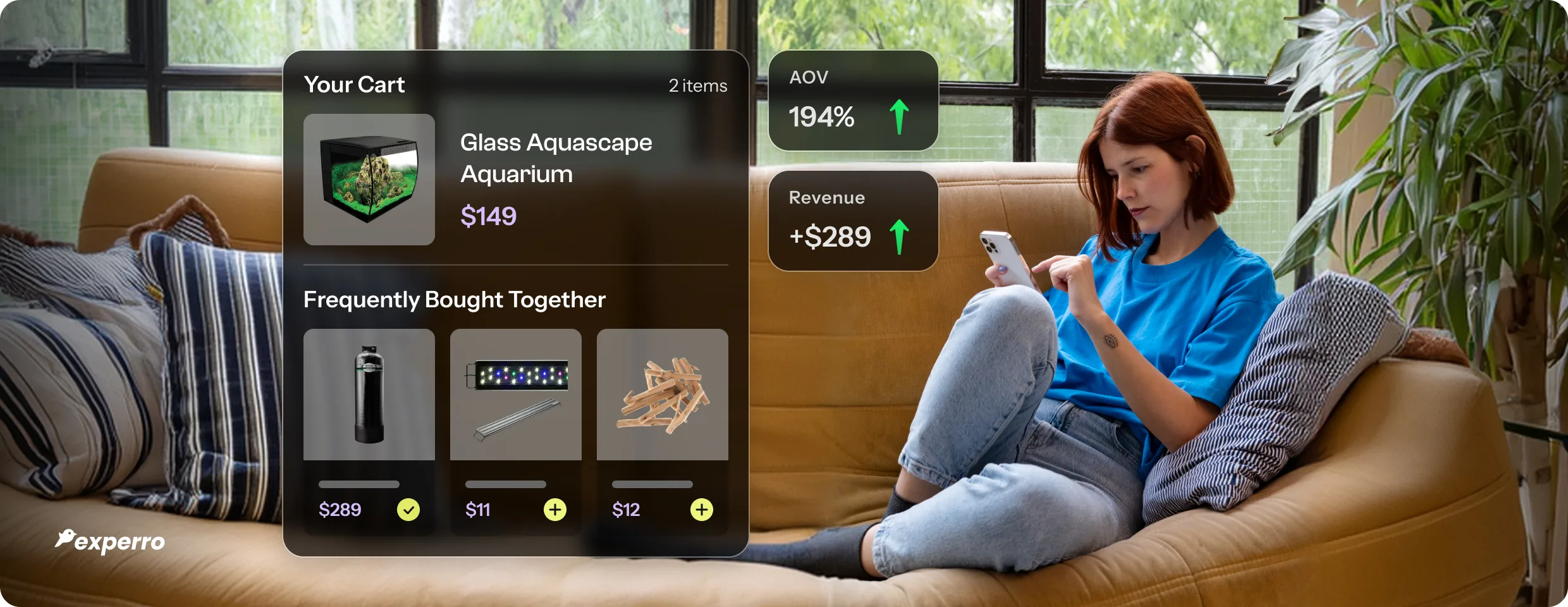
Omnichannel personalization boosts your AOV by using cross-channel data to suggest relevant "frequently bought together" items the moment a customer adds a product to their cart.
Even if you are just getting started with personalization, you can quickly scale your average order value by using tailored promotions and tiered discounts that nudge shoppers to hit specific spending thresholds.
By predicting a customer's next need based on their total brand history, you can serve high-value upsells that feel like helpful advice, leading to a measurable rise in AOV.
This omnichannel strategy not only boosts sales but also enhances the overall digital customer experience.
5. Real-Time Adaptability
One of the key benefits of omnichannel personalization is its ability to adapt to real-time content editing. With the help of advanced personalization platforms, businesses can respond to customers’ behavioral data.
This adaptability is crucial for delivering timely and relevant content. For example, if a customer abandons their shopping cart, an immediate personalized offer can be sent to encourage them to complete the order, thus helping recover abandoned carts.
Omnichannel personalization solutions make this possible by continuously analyzing data and adjusting strategies, ensuring customers receive the most relevant experiences.
6. Better Product Discovery
Omnichannel personalization enhances product discovery with AI and machine learning by tailoring the shopping experience to individual customer preferences. Customers are presented with products that match their tastes, making it easier to find what they need.
Omnichannel personalization software utilizes data from purchase history or previous customer interaction to recommend items that align with customer intelligence through customer segmentation and eCommerce merchandising.
These personalized customer segments not only improve the shopping experience but also increase the chances of purchases.
With a well-implemented omnichannel personalization strategy, businesses can make product discovery more intuitive and enjoyable for their customers.
7. Increased Customer Lifetime Value
Furthermore, connected retail personalization significantly boosts CLV/LCV. By consistently delivering personalized experiences, businesses can build stronger customer relationships.
Experro's omnichannel personalization engine allows for ongoing engagement, keeping customers coming back. This continuous personalization fosters loyalty, leading to repeat purchases and higher LCV.
However, there have been instances where bad personalization has done more wrong to the businesses than good.
By understanding the basics of omnichannel personalization and its impact, businesses can effectively increase their revenue through long-term customer retention.
Explore our blog on eCommerce personalization stats that reveal the real impact of connected, data-driven personalization on CLV and repeat purchases.
Omnichannel Personalization Strategy: How To Get Started Personalizing Across Multiple Channels
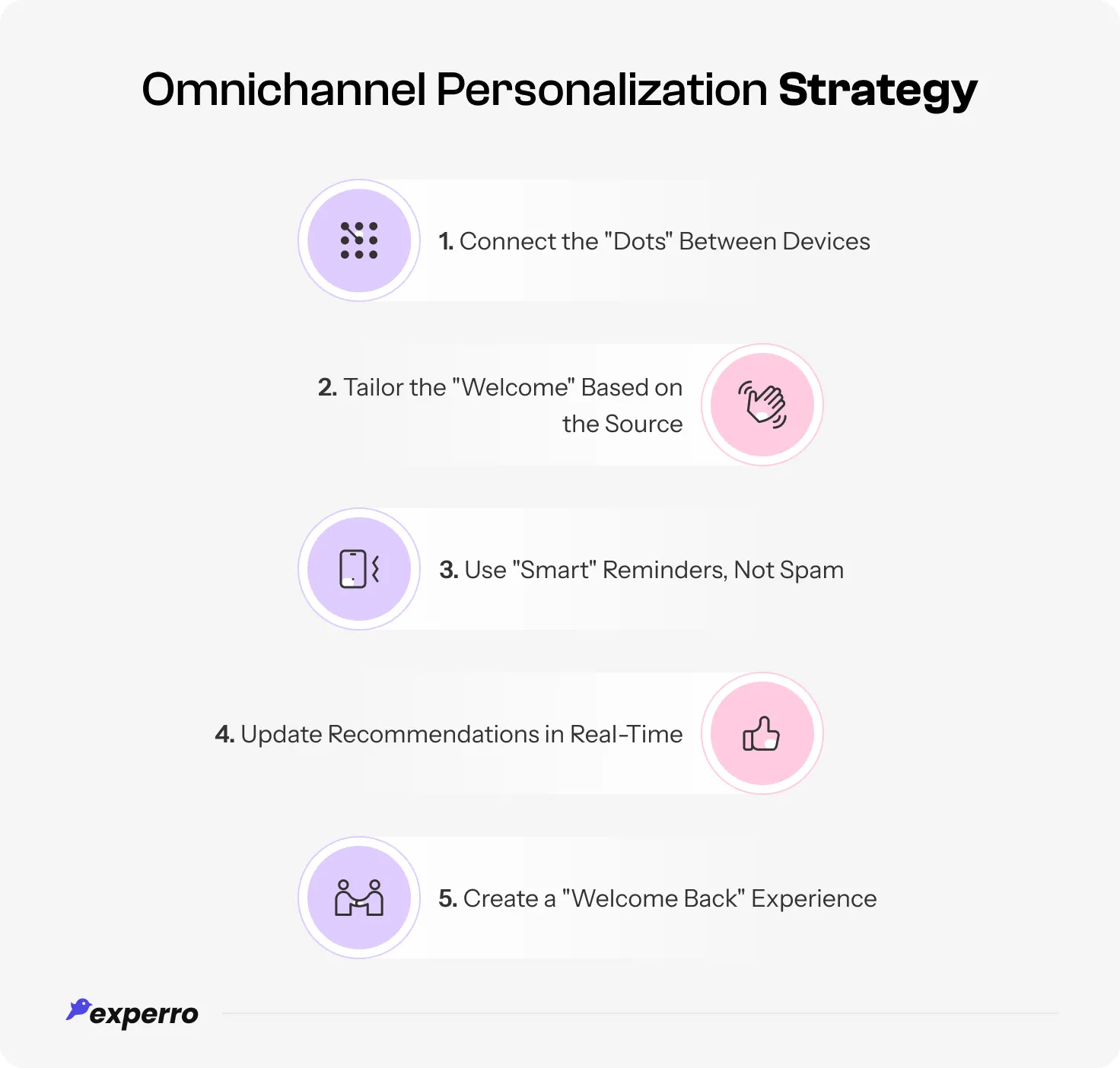
Hyper-personalized omnichannel marketing focuses on delivering relevant experiences at every customer touchpoint. To build an effective omnichannel marketing strategy, keep the following steps in mind:
1. Connect the "Dots" Between Devices
If a customer adds a shirt to their cart on your app, they shouldn't see a "Please browse our site" email an hour later. Link your data so your marketing knows exactly where the customer left off, regardless of the device.
2. Tailor the "Welcome" Based on the Source
If someone clicks a 20% off ad on Instagram, don’t show them a generic homepage when they land. Make sure the first thing they see is that specific offer, so the experience feels like a continuous conversation.
3. Use "Smart" Reminders, Not Spam
If a user ignores your email about a sale, try a quick SMS or a Facebook reminder a day later instead of sending more emails. It’s about meeting them where they are actually looking, not just hitting "send" on the same channel.
4. Update Recommendations in Real-Time
If a customer just bought a coffee machine, your website should immediately stop showing them coffee machines and start showing them filters or beans. This is a simple example of how omnichannel personalization for ecommerce retailers helps brands appear smarter while reducing wasted ad spend.
5. Create a "Welcome Back" Experience
When a repeat customer returns to your site, greet them by name or show them "New Arrivals" in their favorite size. Small touches like this make your store feel like a local shop that actually remembers its regulars.
At the end of the day, your customers aren't loyal to products, they’re loyal to experiences that make them feel seen, heard, and understood.
How Experro Boosted JustRae’s AOV by 45%
See how JustRae used Experro’s Gen AI engine to master omnichannel discovery, serving the right product at the perfect moment to unlock a massive revenue lift.

Drive Unmatched Business Results With Experro's Gen AI Powered Omnichannel Personalization Platform
Imagine delivering omnichannel personalized experiences to every customer, no matter where they interact with your brand.
Sounds tedious? It’s not as tedious as you imagine it would be!
Experro transforms how brands connect with their audience by utilizing a Gen AI personalization engine that delivers hyper-relevant interactions across every channel simultaneously.
This intelligence ensures that whether a customer is browsing on an app or engaging via email, they encounter a unified brand voice and products tailored specifically to their real-time intent.
Our platform is engineered to handle the distinct complexities of both B2B and B2C landscapes, bridging the gap between high-volume retail needs and relationship-driven business cycles.
By automating the heavy lifting of data analysis, Experro allows your team to focus on high-level strategy rather than manual segment management, ensuring every marketing effort resonates with precision.
By staying ahead of consumer expectations with real-time omnichannel intelligence, Experro empowers your brand to outperform the competition and significantly uplift business results.
Conclusion
Adopting omnichannel personalization allows your brand to achieve a unified customer view that drives long-term growth and success.
To succeed in eCommerce market, delivering consistent, personalized experiences across all channels is essential. Unified shopping experience helps businesses create these seamless experiences, boosting customer satisfaction, loyalty, and sales.
Experro's omnichannel personalization platform simplifies this process, enabling businesses to overcome challenges and scale personalized interactions effectively.
For more details on omnichannel transformation for your website, schedule a call with our experts.
FAQs

Pallavi is an ambitious author recognized for her expertise in crafting compelling content across various domains. Beyond her professional pursuits, Pallavi is deeply passionate about continuous learning, often immersing herself in the latest industry trends. When not weaving words, she dedicates her time to mastering graphic design.
Subscribe to Our Newsletter!
Get the latest insights delivered straight to your inbox.
Recommended Reads