
- eCommerce
- Product Discovery
- Generative AI
- 17 min read
You Improved PDPs, But Why Is Revenue Still Stuck?
Published
18 June 2026Updated
28 September 2026

core insights box:
- PDP optimization focuses on clarity, relevance, and shopper intent alignment, helping customers quickly understand products and make confident purchase decisions.
- Many brands fail to match PDP content with shopper intent, overwhelming users with excessive information instead of the right details.
- Experro improves PDP optimization with AI by refining product content, aligning messaging with intent, and increasing engagement and conversions effectively.
Your product page is either your best salesperson or the reason buyers quietly walk away.
98% of shoppers research before they buy. They arrive informed, curious, and already halfway to a decision. Then something subtle breaks it.
A weak image. A vague headline. A missing spec. A review that is not there when they need it. A CTA that does not feel safe enough to click. Each one slowly breaks trust and chips away at the only thing your page must protect: the buyer’s confidence.
And just like that, 56% leave without buying. Not because the product failed. Because the page did. You paid for every click. The drop-off stays invisible. Analytics says “low conversion”. It never shows you the exact moment confidence broke.
Brands hitting 6% conversion did not find a better product. They optimized every PDP element copy, visuals, layout, trust signals, specs, and CTAs and removed every reason to hesitate. This guide shows you exactly what they fixed, element by element.
What is a PDP (Product Detail Page)?
A Product Detail Page (PDP) is a single eCommerce page that displays complete information about one product to help shoppers decide whether to buy it. It includes product images, title, price, key features, specifications, description, and customer reviews.
This is the page where shoppers evaluate the product after discovering it from search, ads, or optimized category pages, and make the final decision to purchase or not.
PDP vs PLP
PLP and PDP serve different stages of the buying journey - one drives exploration, the other drives evaluation and conversion.
Here are the key differences:
| Aspect | PLP (Product Listing Page) | PDP (Product Detail Page) |
| Purpose | Browsing & discovery | Evaluation & conversion |
| User intent | Explore options | Decide on a product |
| Content depth | Short, summary-level info | Detailed, decision-level info |
| Role in journey | Navigation stage | Conversion stage |
| User behavior | Scanning multiple products | Deep reading of one product |
| Conversion impact | Indirect support | Direct revenue driver |
| Time spent | Low to medium | High (focused evaluation) |
| Primary action | Click to explore | Add to cart / purchase decision |
What is PDP Optimization?
PDP optimization is the process of improving a product detail page so shoppers can make faster, clearer buying decisions.
It transforms a standard product page into a structured decision-support experience.
It involves refining product images, titles, descriptions, key features, structured data, and user generated content so every element improves clarity and trust.
Strong PDPs also rely on better content structuring and data quality, as discussed in product data enrichment and are closely tied to visibility improvements covered in eCommerce SEO best practices.
Modern optimization also ensures mobile-first performance and smooth UX while driving stronger outcomes through eCommerce conversion rate optimization.
The goal is simple: reduce friction, build confidence, and improve conversions.
Traditional Ways of Doing PDP Optimization
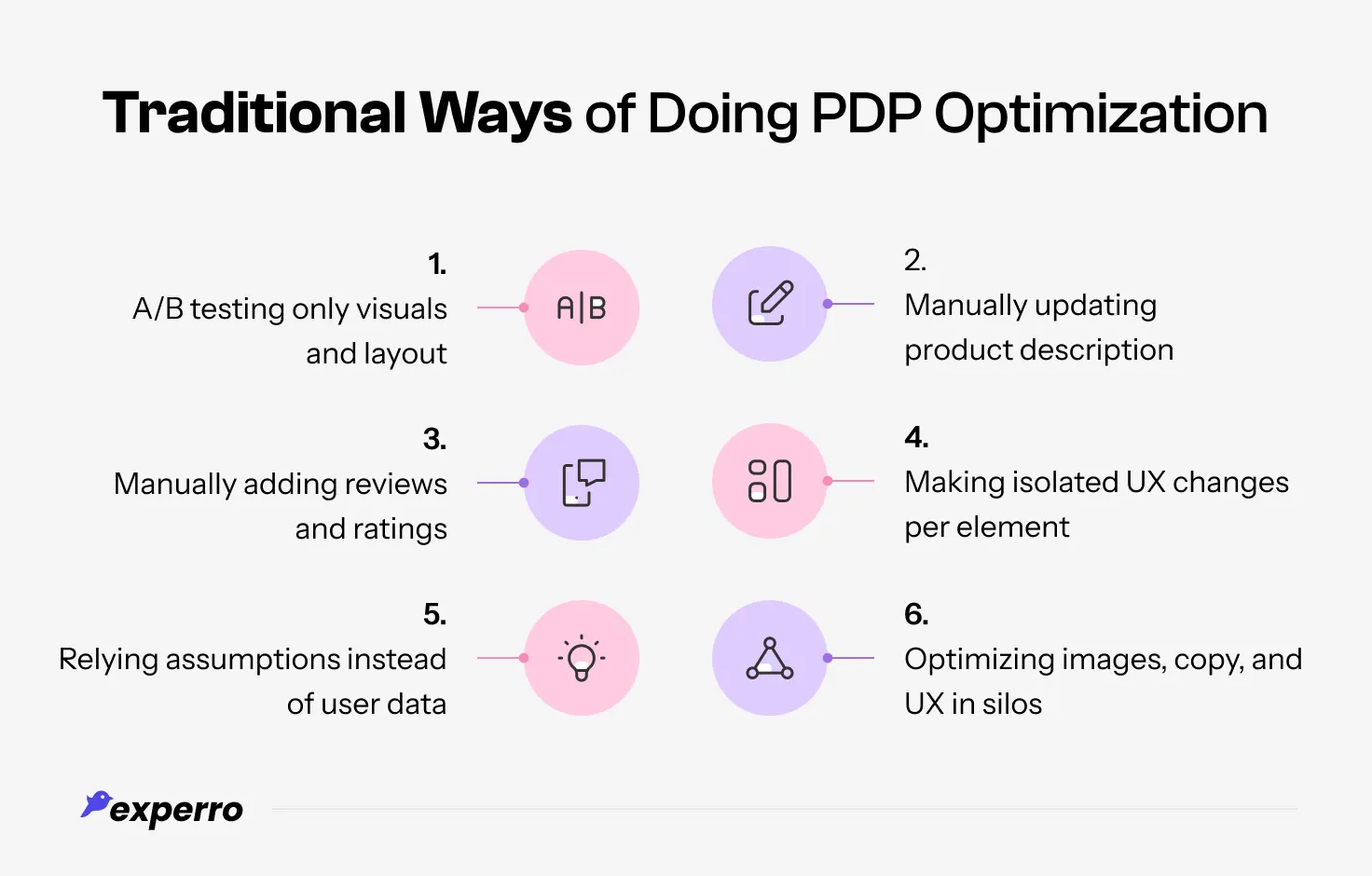
Most businesses still treat PDP optimization strategy like a checklist, fixing visuals, rewriting copy, adding reviews, and running A/B tests.
But even after all these efforts, the product page conversion rate often stays frustratingly flat 😕 That usually means something important is missing in how the product experience is actually being shaped.
1. A/B testing only visuals and layouts
Teams often focus on A/B testing visuals and layouts like colors, banners, and CTA buttons, hoping it will improve conversions. But small visual tweaks rarely fix real issues.
What actually matters is understanding intent. When you look at structured product data and real search behavior through search intelligence, you start seeing what shoppers are really trying to find before they even land on the page.
2. Manually updating product descriptions
Product descriptions are rewritten and expanded repeatedly, but more content does not always improve product content optimization.
Shoppers want instant clarity through strong AI product descriptions that highlight key benefits quickly instead of long explanations they need to decode.
3. Manually adding reviews and ratings
UGC, product page reviews, and ratings are added as social proof, but when they remain static, they lose timing and influence.
This is where types of website personalization becomes important, showing the right proof at the right moment instead of placing it passively on the page.
4. Relying on assumptions instead of user data
Many PDP decisions still come from assumptions instead of real behavioral insights across merchandise product listings and product journeys.
Using eCommerce analytics helps identify real friction points like hesitation, drop-offs, and confusion that are otherwise invisible.
5. Optimizing images, copy, and UX in silos
When product images, copy, and UX are improved separately, the experience often feels disconnected across the product detail web page.
What really works is bringing everything together. A unified approach like digital customer experience connects the full experience — from product page layout to trust signals into one smooth flow that builds trust and helps improve conversions, especially in a mobile-first PDP environment.
Why AI-based PDP Optimization is the Way Forward
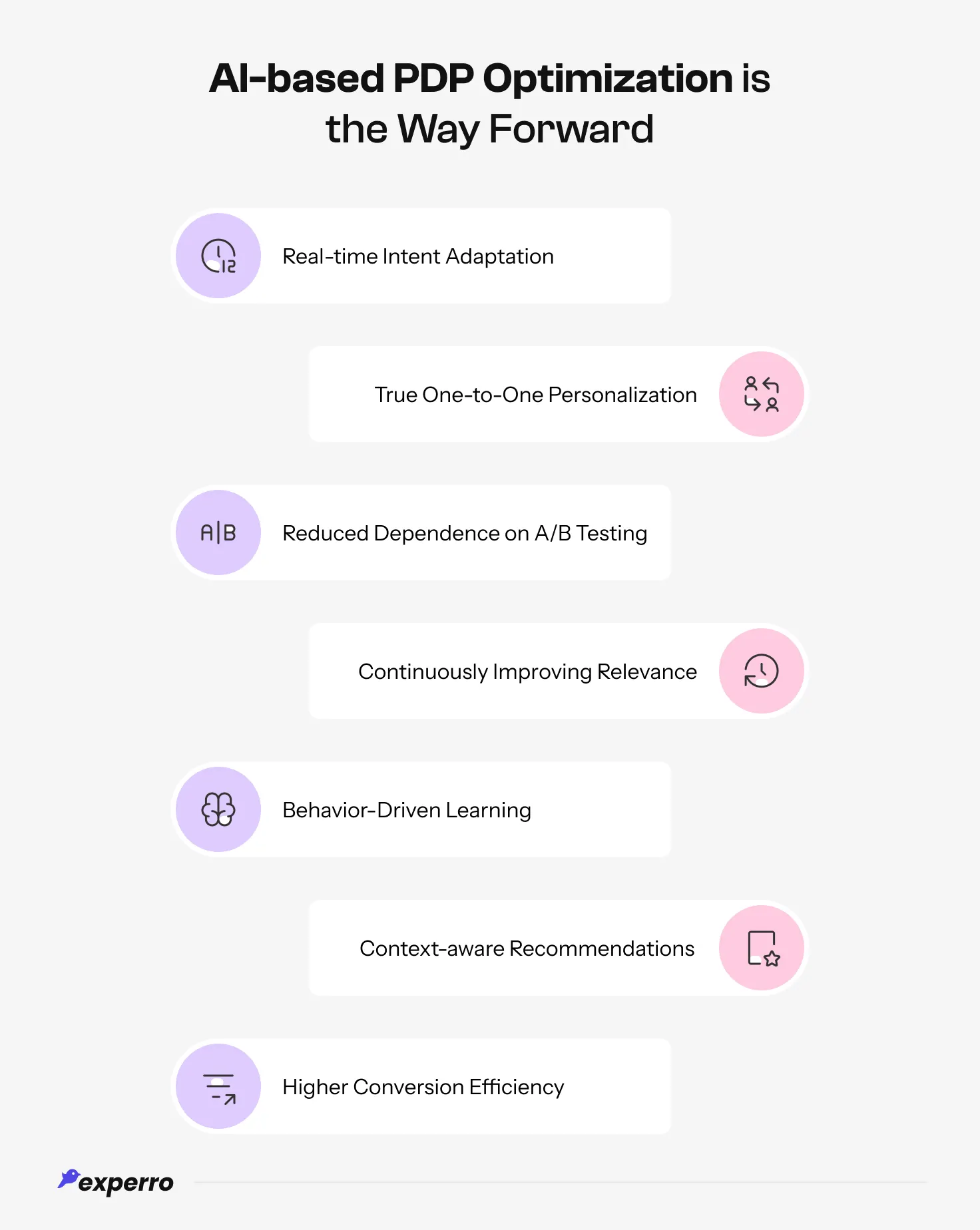
Online shopping is now instant; shoppers decide in seconds, not minutes. As shoppers increasingly expect relevant products, personalized content, and tailored experiences, PDP optimization is rapidly shifting from static product content to AI-driven, behavior-aware experiences.
In fact, 59% of online shoppers say personalization makes it easier to discover products that match their interests.
Here are the ways it is changing.
1. From Static Pages to Real-time Adaptation
Once you move beyond static optimization, everything changes.
With AI PDP optimization, the product page is no longer fixed. It becomes responsive adjusting itself based on how each visitor interacts with it.
This shift is closely aligned with concepts like real-time personalization in eCommerce, where experiences evolve instantly instead of remaining static.
So instead of showing the same experience to everyone, the page starts aligning itself with real buyer intent, highlighting the right key features, and subtly reshaping the journey in real time.
It feels less like a webpage… and more like a guided experience.
2. From Generic Content to Personal Experiences
And once the page becomes responsive, the next shift naturally follows personalization.
With AI product detail page optimization, every visitor begins to see a slightly different version of the same PDP, shaped by what matters most to them.
This is where content personalization helps create more relevant shopping experiences tailored to individual customer preferences and behavior.
This could mean:
- More relevant product images that match intent
- Smarter placement of product benefits
- Personalized product descriptions
- More impactful social proof based on behavior
Instead of overwhelming users with everything, the page gently highlights what actually matters.
And that's when engagement starts to feel natural, not forced.
3. From Manual Testing to Continuous Learning
As personalization improves, another inefficiency becomes clear — traditional A/B testing.
For years, PDP optimization strategy has relied on testing variations, waiting for results, and iterating slowly.
But AI removes this delay completely.
Modern PDP optimization software continuously learns from real user behavior and updates the product page performance automatically. No waiting cycles. No guesswork.
Just continuous improvement happening in the background.
4. From Guesswork to True Relevance
Once learning becomes continuous, relevance becomes sharper.
Because AI isn’t relying on assumptions, it’s reading real signals from search engines, user interactions, and engagement behavior.
This is where technologies like semantic search and personalized search become critical in understanding intent more deeply.
This ensures your eCommerce product page optimization always stays aligned with what users are actively looking for, not what you think they want.
And that shift dramatically improves how a product detail page performs in real situations.
5. From One-time Optimization to Continuous Intelligence
At this stage, the PDP stops being a static asset.
Every interaction feeds the system:
- Clicks reveal interest
- Scroll depth shows engagement
- Drop-offs highlight friction
Over time, this transforms your optimized product page into a continuously evolving experience, one that becomes smarter with every visit.
6. From Recommendations to Contextual Guidance
As intelligence improves, recommendations also evolve.
Instead of generic suggestions, AI delivers context-aware, profile-based recommendations shaped by user behavior, preferences, and intent.
This reflects modern eCommerce recommendation systems powered by generative AI and advanced personalization engines.
So rather than just showing related products, the PDP starts guiding decisions, helping users discover what fits their intent naturally.
This shift improves not only engagement but also average order value, conversion rates, and overall shopping satisfaction.
7. From Page Optimization to Conversion Intelligence
And when everything comes together real-time adaptation, personalization, continuous learning, and contextual guidance, the PDP transforms completely.
It’s no longer just about product page optimization.
It becomes a system where structured data, product features, customer feedback, and social proof all work together to influence decisions more intelligently.
This is what makes AI-driven PDPs fundamentally different, they don’t just display information, they shape outcomes.
The shift from static pages to AI-ready PDP optimization is a mindset change, not just an upgrade. In a world of endless choices and limited attention, real-time adaptation is what drives trust, decisions, and conversions in modern eCommerce.
What Are the Key Components of PDP Optimization?
What makes a shopper stay, trust, and ultimately click “Buy Now”? It's rarely one thing.
Every title, image, review, price, and recommendation influences how customers evaluate a product. Together, these elements build confidence, remove uncertainty, and guide purchase decisions.
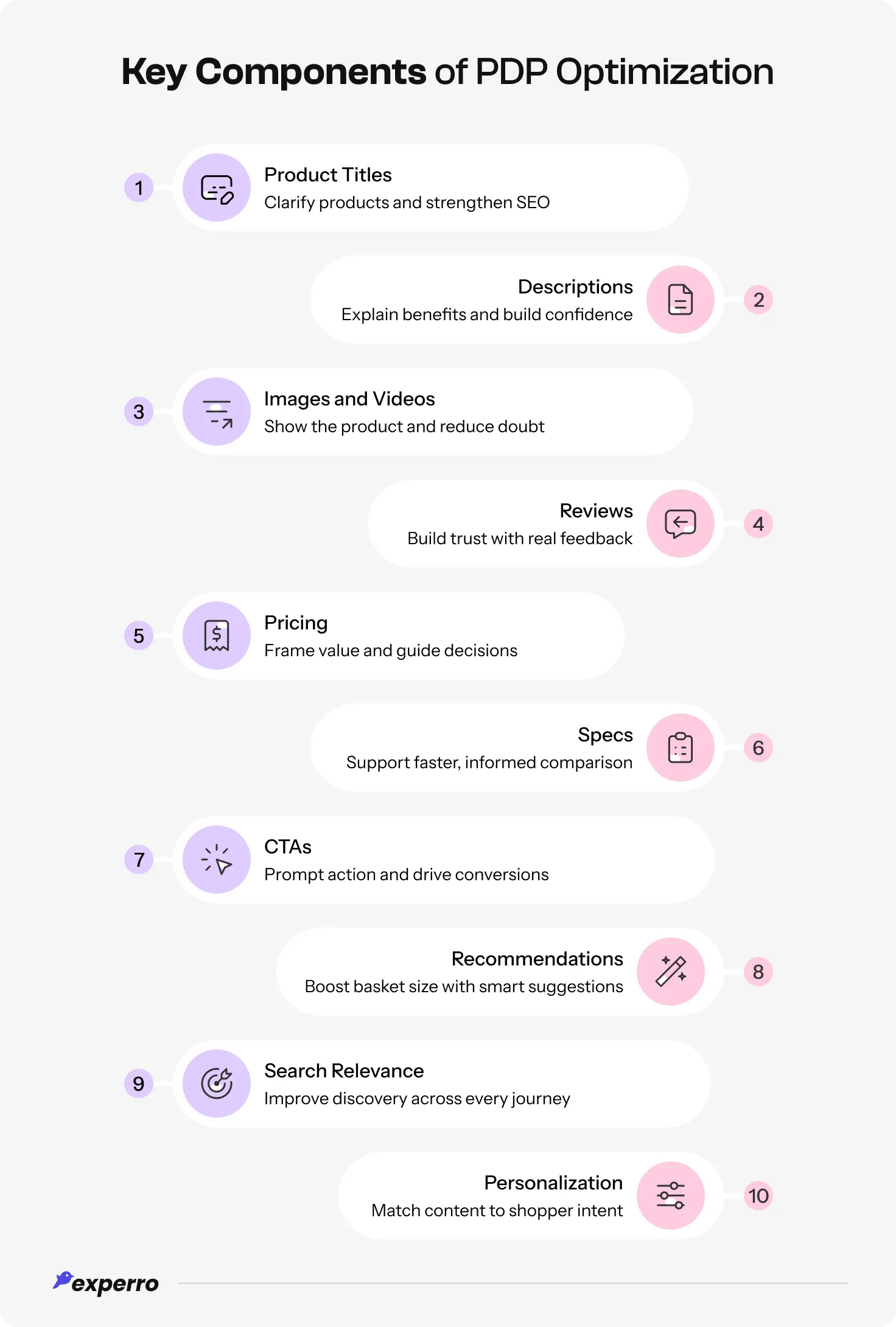
Here are the key components that make PDP optimization truly effective.
1. Product Titles
Your product title creates the first impression.
It helps shoppers instantly understand what the product is while improving search relevance, discoverability, and visibility across search engines and eCommerce search experiences.
2. Product Descriptions
Product descriptions communicate the product's value beyond its features.
They explain benefits, use cases, and key information that help customers understand why the product matters and whether it fits their needs.
3. Images & Videos
Images and videos help shoppers visualize the product before purchasing. High-quality visuals, lifestyle content, and product demonstrations improve understanding, reduce uncertainty, and create greater buying confidence.
This is a key part of modern product experience optimization approaches that focus on visual trust-building.
4. Reviews
Reviews provide real customer experiences that shoppers trust. They offer valuable insights into product quality, performance, and satisfaction while strengthening credibility through authentic social proof.
This aligns with the growing importance of customer experience in eCommerce, where trust signals heavily influence conversions.
5. Pricing
Pricing helps customers evaluate whether a product delivers the value they expect.
Clear pricing, promotions, discounts, and savings opportunities influence perception and support purchasing decisions.
6. CTAs
Calls-to-action guide shoppers toward the next step in their journey.
Whether it's "Add to Cart" or "Buy Now", effective CTAs reduce friction and encourage action when purchase intent is highest.
7. Recommendations
Recommendations help shoppers discover complementary products, alternatives, and accessories.
They improve product discovery while supporting upselling and cross-selling opportunities that increase overall order value.
8. Search Relevance
Search relevance ensures products appear when customers are actively looking for them.
Optimized product attributes, information, and keywords improve discoverability across both on-site search and organic search results.
9. Personalization
Personalization adapts the shopping experience based on customer behavior, preferences, and intent. By delivering more relevant content, recommendations, and messaging, it helps create a more engaging and meaningful buying journey.
This is a key pillar of modern hyper personalization in eCommerce strategies that improve engagement and conversion outcomes.
When these components work together, a product detail page becomes more than just a place to showcase products, it becomes a powerful experience that informs, reassures, and guides customers toward confident purchase decisions.
This is what transforms standard eCommerce product pages into high-performing, conversion-focused PDPs.
How to Optimize a PDP Using Best Practices
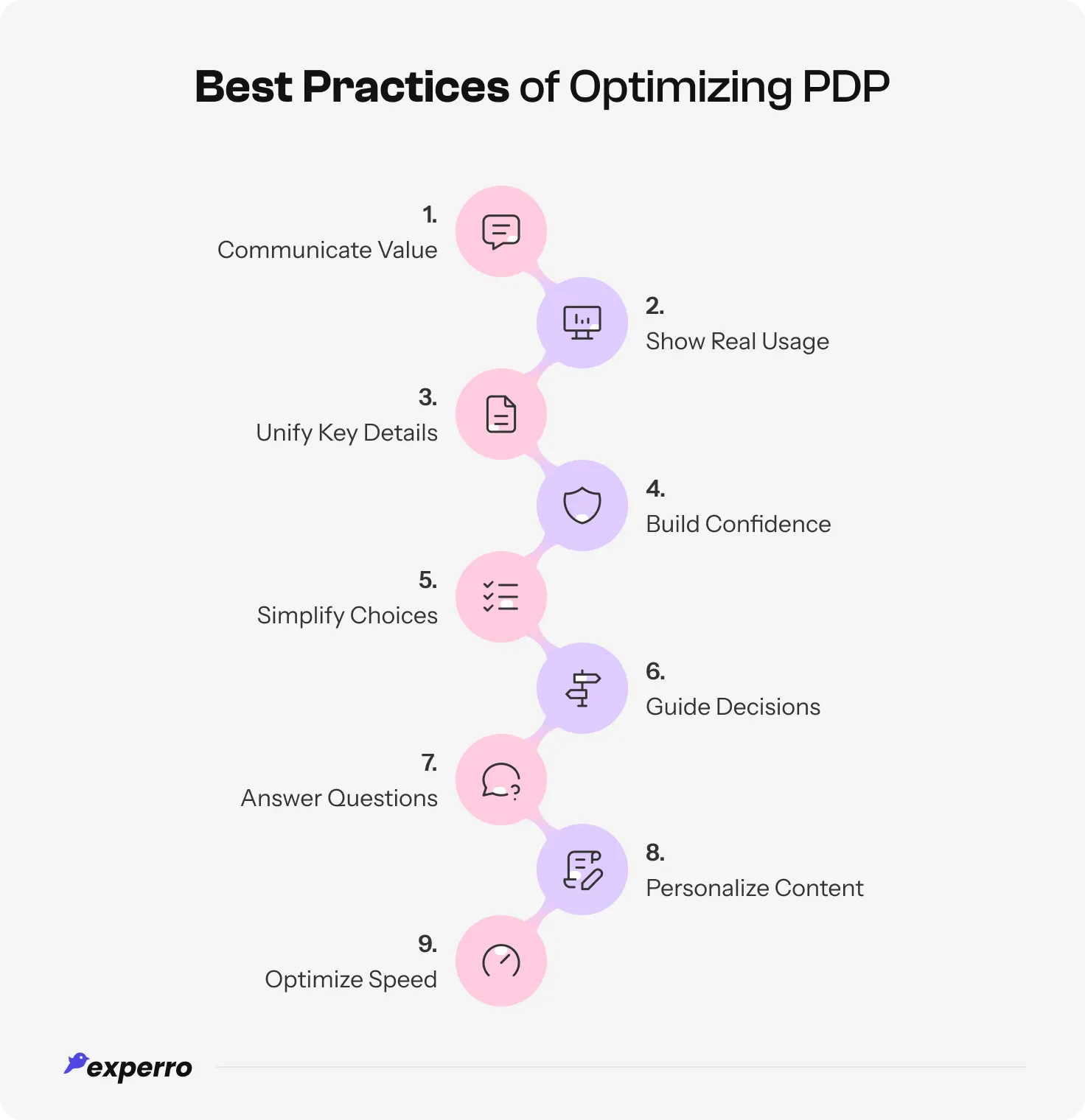
Your product detail page (PDP) has one job: help shoppers feel confident enough to buy.
The challenge? Most customers make that decision quickly. In fact, studies show users form an impression of a webpage within seconds.
If your PDP doesn't communicate value, build trust, and answer key questions immediately, you risk losing the sale before the buying journey even begins.
Here's how to optimize your PDP to turn more visitors into customers.
1. Clarify Product Value at First Glance
When someone lands on your PDP, they should instantly understand what your product is, who it's for, and why it's worth their attention.
Clear product titles, compelling product descriptions, pricing, and key benefits should work together to answer one question:
"Why should I care?"
The faster you communicate value, the more likely shoppers are to keep exploring instead of bouncing.
2. Show Products in Real-World Context
People don't buy products; they buy outcomes.
That's why your product images and videos should do more than showcase features. They should help shoppers imagine the product in their own lives.
Lifestyle visuals, demonstrations, and user-generated content make products feel more tangible, helping customers move from curiosity to confidence.
3. Keep Key Buying Details Together
Nothing kills momentum faster than making shoppers hunt for information.
Keep pricing, delivery details, return policies, availability, and specifications close together.
When key buying information is easy to find, customers can evaluate products faster and make decisions with less effort.
Good product page optimization removes friction before it becomes frustration.
4. Use Social Proof at Critical Decision Points
Before clicking "Buy Now", most shoppers look for reassurance.
Research consistently shows that customer reviews influence online purchase decisions. That's why positive reviews, ratings, and customer feedback should appear where decisions happen, not buried at the bottom of the page.
The right social proof can turn hesitation into confidence.
5. Simplify Product Selection
More choices don't always lead to more sales.
If customers have to sort through too many options, decision fatigue can quickly set in. Clear variant selection, advanced eCommerce filters, visual swatches, and helpful guidance make choosing easier and keep shoppers moving forward.
The simpler the decision feels, the more likely customers are to complete it.
6. Structure Content Around Buying Decisions
Your customers aren't looking for more information, they're looking for the right information.
Most shoppers follow a predictable path:
- What is it?
- Why do I need it?
- Can I trust it?
- Is it worth it?
Structure your product detail page around these questions, and you'll make the buying journey feel far more intuitive.
7. Address Purchase Questions Proactively
Every unanswered question creates doubt.
Whether it's sizing, shipping, returns, compatibility, or product specifications, your PDP should answer common concerns before customers need to ask.
The fewer questions shoppers have, the fewer reasons they have to leave.
8. Personalize PDPs Around Shopper Intent
Not every visitor arrives with the same goal.
Some are researching. Others are comparing. Some are ready to buy.
Modern AI PDP optimization helps you adapt content, recommendations, and messaging based on shopper behavior, creating a more relevant and engaging experience for every customer.
9. Optimize PDP Performance Across Devices
A slow PDP can undo all your optimization efforts.
Research shows that even small delays in page load time can hurt engagement and conversions. With mobile devices accounting for a large share of eCommerce traffic, fast load speeds, responsive layouts, and smooth navigation are no longer optional.
If your PDP isn't fast and mobile-friendly, you're likely losing potential customers before they even see your product.
The best PDPs make buying decisions simple. By providing clarity, building trust, and reducing friction, they help shoppers move from hesitation to confidence—resulting in better conversions and a stronger customer experience.
How the Process of PDP Optimization Works
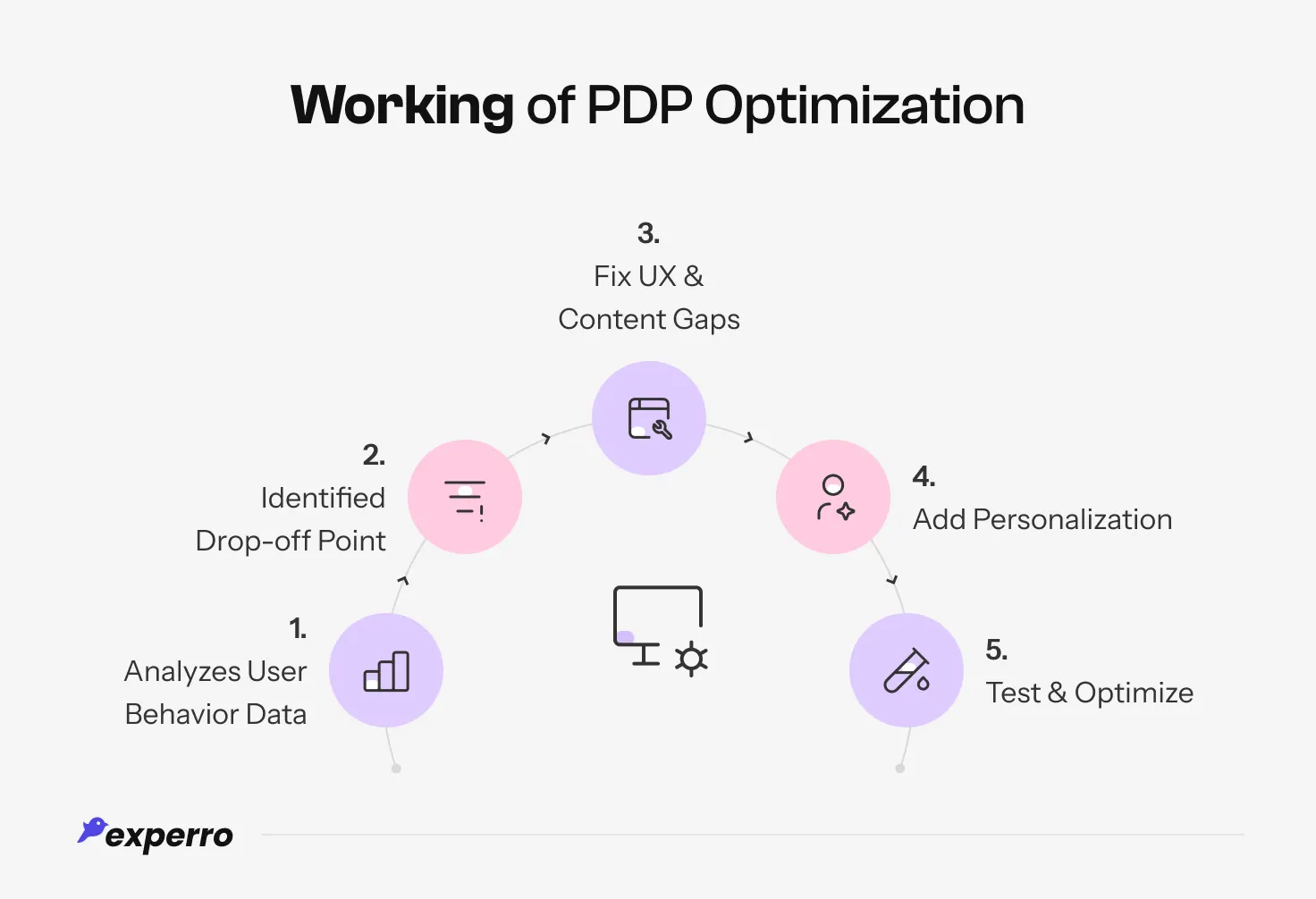
Great PDP optimization isn't just about guessing what customers want, it's about understanding how they shop.
By analyzing behavior, removing friction, and continuously improving the experience, you can create optimized PDPs that help shoppers move from interest to purchase more confidently.
1. Analyze User Behavior Data
Every click, scroll, and interaction tells a story.
Analyzing user behavior helps you understand what grabs attention, which product features drive engagement, and how customers move through your product detail page.
2. Identify Drop-Off Points
If shoppers are leaving without buying, there's usually a reason. Identifying drop-off points helps uncover friction caused by unclear messaging, missing information, weak social proof, or poor user experiences.
3. Fix UX and Content Gaps
Once you know what's slowing shoppers down, you can take action.
Improving product descriptions, product images, CTAs, and key buying details makes your product page easier to understand and easier to buy from.
4. Add Personalization Improvements
AI PDP optimization helps deliver relevant recommendations, content, and experiences that align with individual shopper preferences and behavior, as seen in how the eCommerce product search algorithm works.
5. Test and Optimize Continuously
Customer expectations change constantly. Regular testing helps you refine your product detail page optimization strategy, improve conversion rates, and ensure your PDP continues to perform at its best.
PDP optimization works by closely tracking how shoppers engage with your product page, identifying what creates hesitation, and refining content, structure, and messaging so every interaction becomes clearer, faster, and more likely to convert.
How Experro Powers Smarter PDP Optimization with AI
What if your product detail page could show shoppers the information they care about most at the exact moment they need it?
That's where traditional PDP optimization often falls short. Most brands show the same product content to every visitor, even though every shopper has different needs, questions, and purchase intent.
Experro helps solve this challenge through AI PDP optimization, making product content more relevant, personalized, and aligned with how customers actually shop.
1. Turns Static Copy into Intent-Based Messaging
Most product descriptions are written once and shown to everyone.
Experro helps transform static product content into messaging that reflects what shoppers are actively looking for.
By combining behavioral intelligence with AI product enrichment, brands can deliver richer, more relevant product information and AI product descriptions that better align with customer intent.
2. Personalizes Descriptions Using Behavior Signals
Not every shopper is looking for the same information.
Some care about features. Others focus on value, outcomes, or specific use cases. Experro uses behavioral signals to surface the most relevant product information, helping brands make the product page more personal while improving product understanding and engagement.
3. Adapts Messaging to Shopper Journey Stage
The information customers need changes throughout the buying journey.
A first-time visitor may need education and context. A high-intent shopper may need reassurance and details. Experro helps deliver the right messaging at the right stage, making product content more useful and easier to act on.
4. Updates Content for Real-Time Relevance
Customer interests and buying behavior constantly evolve.
Experro helps keep product descriptions and product content relevant by adapting messaging based on changing shopper signals. This helps customers discover information that reflects their current needs and interests.
5. Refines Product Text Using User Signals
Every click, search, and interaction reveals what customers care about most.
Experro uses these insights to continuously improve product messaging. Over time, content becomes clearer, more relevant, and better aligned with customer expectations and purchase intent.
6. Improves Content via Engagement Data
Experro analyses engagement data through its eCommerce merchant intelligence capabilities to identify what captures attention, what drives interaction, and what supports buying decisions.
These insights help brands continuously improve product experiences without relying on guesswork.
7. Aligns Messaging with Purchase Intent
Shoppers engage more when content matches their goals.
Experro helps align product messaging with customer intent, making it easier to understand product value, evaluate key benefits, and move toward a purchase decision with confidence.
8. Structures Information to Reduce Decision Friction
Customers shouldn't have to search for answers when they're ready to buy.
Experro helps organize product descriptions, attributes, and key information in a clear, easy-to-scan format.
This makes important details easier to find, reduces friction, and helps shoppers make faster, more confident purchase decisions.
One of the best examples of product detail page optimization is Diamonds Direct. By creating more engaging product experiences with Experro, the brand achieved 42% revenue growth in less than a year. The success highlights the value of giving shoppers the right information at the right time.
The Result
PDP optimization becomes powerful when it moves beyond static pages into AI PDP optimization that adapts to real shopper intent.
As the best platform for AI-driven PDP optimization, Experro helps turn product detail pages into smarter experiences that build trust, increase engagement, and drive confident purchase decisions.
Conclusion: Great PDPs Make Buying Easier
Think about the last time you abandoned a product page. It may not have been because you disliked the product, it was likely because you still had questions or weren't fully convinced.
That's the role of an effective product detail page (PDP). A strong PDP goes beyond marketing claims to provide the information, proof, and reassurance shoppers need to make confident decisions. Clear product details, compelling visuals, customer reviews, and trust signals all work together to reduce uncertainty and improve the buying experience.
When brands make it easy for customers to understand a product's value, conversions naturally follow. The most successful PDPs focus on removing friction and building confidence at every stage of the journey.
FAQs

With 6+ years of experience in AI, software, and digital transformation across tech, healthcare, and fashion, Rahul focuses on making complex ideas simple, clear, and actually useful. He has learned how often great ideas get lost in complexity, which is why he centers his writing on clarity, helping entrepreneurs and leaders cut through noise and make decisions with confidence.
Subscribe to Our Newsletter!
Get the latest insights delivered straight to your inbox.